-
Listing
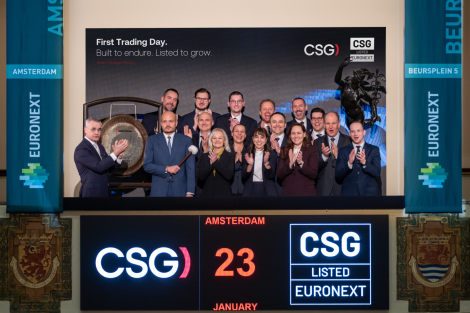
Strengthening Europe’s strategic autonomy through capital marketsCzechoslovak Group lists on EuronextRead moreWorld’s largest defence IPO ever recorded.
Learn more about Euronext’s initiatives to enhance financing and visibility for European aerospace and defence companies -
Trading
Where European Government Bonds meet the futureFixed Income derivativesRead moreTrade Mini Bond Futures on main European Government Bonds
-
Clearing
Step into Europe’s next phase of Repo ClearingRepo ClearingRead moreEuronext is expanding its repo clearing services to boost market access, liquidity provision and collateral optimisation across Europe.
-
CSD
European CSD modelBuilding the CSD of Choice in EuropeRead moreEuronext Securities is shaping the future of European capital markets by enhancing integration, connectivity, and innovation.
-
Technology
Euronext Technology SolutionsHigh-Frequency Trading Solution (HFTS)Read moreThe new generation of high-frequency risk trading platforms, offering the highest performance with ultra-low latency and minimal jitter, all at a low total cost of ownership.
-
Data
-
Indices
Access the white paperInvesting in the future of Europe with innovative indicesRead moreThe first edition of the Euronext Index Outlook series with a particular focus on the European Strategic Autonomy Index.
- Regulation
-
About Euronext
Euronext strategic planInnovate for Growth 2027Read moreShaping capital markets for future generations
Metriks AI Benefit Corporation lists on Euronext
TradeLab lists on Euronext
Euronext announces launch of Euronext ETF Europe at ETF Ecosystem Unwrapped 2025
At ETF Ecosystem Unwrapped 2025, held in London on 21-22 May, Aurélien Narminio, Head of Indices, ETFs and Securitised Derivatives at Euronext, announced the upcoming launch of Euronext ETF Europe, a major initiative to address fragmentation and create the first truly pan-European ETF market.
Scheduled to go live in September 2025, the project represents a significant milestone in Euronext’s strategic roadmap to build a unified European capital market infrastructure.
During his remarks, Aurélien Narminio emphasised the simplicity of the approach: one listing, one order book, one streamlined post-trade chain. Rather than adding complexity, Euronext ETF Europe offers a cohesive market structure designed to support growth across the ETF ecosystem, from issuers to investors.
Tackling fragmentation with a single European market
Fragmentation in today’s European ETF market triggers inefficiency across the value chain. Issuers must list products across multiple venues to access different geographies, liquidity is scattered across various trading books – often off-exchange – and post-trade processes remain inconsistent and costly across borders.
Euronext ETF Europe aims to remove these barriers by bringing together ETF trading across its markets in Amsterdam, Milan and Paris into a unified offering. It will feature a single European order book powered by Optiq®, the Euronext trading platform, alongside harmonised membership, market data access and post-trade infrastructure.
What the new model means for market participants
The new model will deliver benefits across the value chain:
-
For issuers: Euronext ETF Europe will enable ETF issuers to access Euronext’s full distribution network with a single listing. This simplifies market entry, reduces the operational burden of multi-venue listings and supports broader product visibility across Europe.
-
For trading members and market makers: By consolidating liquidity into a single order book, Euronext ETF Europe is expected to enhance price formation, tighten spreads and deepen trading volumes. Access across venues will be streamlined, supported by coordinated membership arrangements and a unified market data feed.
-
For investors: By improving transparency and simplifying access, the platform will enable more efficient investment in ETFs across borders. Greater on-exchange liquidity and improved execution outcomes align with the goals of the EU Capital Markets Union and the broader ambition of building a European Savings and Investment Union.
Supporting operational continuity while building for the future
From a post-trade perspective, the new model will be reinforced by Euronext Clearing and Euronext Securities, creating a centralised and efficient settlement chain. While the target model will be fully in place by September 2026, transitional arrangements will ensure continuity for trading members and custodians during the implementation phase.
Euronext is actively engaging with members and service providers to facilitate operational readiness, including harmonisation of cross-membership, testing activities and support with settlement arrangements. Issuers with existing multi-listed ETFs will be encouraged to consolidate listings ahead of go-live.
A step forward in European market integration
The launch of Euronext ETF Europe reflects Euronext’s broader vision to strengthen Europe’s capital markets and support deeper integration. Unifying the ETF market is a tangible step towards delivering the infrastructure necessary for a more efficient, connected and competitive financial system in Europe.
By drawing on its unique position across European financial centres, Euronext is bringing together local strengths into a pan-European solution. Euronext ETF Europe marks a fundamental change in the way ETFs are accessed, traded and settled across Europe.
For more information, market participants and issuers are invited to contact the Euronext ETF team at etf@euronext.com.
TradeTech 2025 insights with Emilie Rieupeyroux: Expanding retail access in European markets through transparency, quality of execution and innovation
At TradeTech 2025, retail trading took centre stage during a panel titled “Increasing retail participation in Europe: How can equity market participants better attract and integrate retail flow into the trading ecosystem to help boost liquidity opportunities in Europe?”.
Moderated by Lara Shevchenko, Senior Policy Advisor for Market Structure at FIA EPTA, the session explored how equity market participants can better attract and integrate retail investors into the trading ecosystem, ultimately strengthening liquidity and improving execution quality across Europe.
This article explores the key themes raised during the session, including structural barriers to retail engagement, the importance of transparency in execution and the role of exchanges in supporting a broader, more inclusive investor base. Euronext’s Emilie Rieupeyroux was a central voice in the discussion, offering insight into the infrastructure, market dynamics and investor trends shaping retail participation across Europe today.
A decade of transformation and acceleration
Retail engagement across European cash and derivatives markets has continued to expand, and Euronext has been closely monitoring and nurturing this shift. As Emilie Rieupeyroux highlighted, one compelling metric is the usage of Euronext market data by end-investors. In 2019, around 1.2 million individuals were accessing data across the group, and by 2025 that number has risen to nearly 7 million. This significant increase reflects the growing appetite and participation of retail investors in capital markets, including those that may trade less but hold longer positions.
She attributes this to many factors, including more diversified product offerings - including crypto assets which have pulled younger investors into broader financial markets and the emergence of more targeted market models, enabling easier retail access and better quality of execution.
In response, Euronext is expanding its retail-focused product suite to support this next generation of investors. From a dedicated segment for retail on cash equities - Best of Book, to pan-European and US stock coverage via GEM, crypto ETPs, a wide range of ETFs to newly launched mini options and mini futures on government bonds, the goal is to lower the barriers to market access, without compromising investor protection or market integrity.
Improving execution through transparency and multilateraliry
One of the more debated topics during the panel was the role of segmentation in retail flow and its implications for price formation and execution quality. While some panellists voiced concern that retail segmentation could harm central order books, Emilie Rieupeyroux took a more nuanced stance.
She stressed that segmentation alone is not the issue. Rather, it is how segmentation is implemented. “Retail flow is highly sought after because it is non-toxic and valuable to overall market functioning,” she said. “But too often, execution of this flow happens bilaterally off-exchange, where it’s shielded from competitive pricing. That’s where quality of execution breaks down.”
At Euronext, segmentation is used exclusively to offer price improvement. Through the dedicated Euronext Best of Book model, retail orders remain within the transparent on-exchange environment but benefit from enhanced execution quality thanks to their identifiable characteristics. On average they benefit from 1 basis point price improvement versus the best price available.
“Segmentation, when it leads to better outcomes and remains consistent with multilateral and transparent trading - i.e. where retail flow can interact with various counterparts who compete to offer the best execution price, can be a powerful tool,” Emilie Rieupeyroux noted. “It’s about alignment with investor interests rather than channelling flow away from the multilateral and lit market.”
Responding to a shifting investor demographic
The panel also mentioned that retail investors today are not just buying blue chips and holding for the long term. Many are now exploring more sophisticated tools such as leveraged ETFs and equity options as part of more dynamic, diversified strategies. Euronext is actively responding to this evolution in investor behaviour by developing smaller, more accessible contract sizes, such as its newly launched mini options and upcoming mini futures on European government bonds. These allow individual investors to gain exposure to markets or instruments that were previously out of reach.
Emilie Rieupeyroux also pointed to the growing need for education on not only on how to invest, but also on how market infrastructure works. “We are doing a lot of education around trading mechanics, execution venues and transparency,” she said. Euronext's initiatives include online educational resources, participation in retail-focused events.
Fair access and a resilient market
Looking ahead, Emilie Rieupeyroux emphasised the importance of sustaining a market structure that encourages retail participation while safeguarding market resilience. Additionally, she also stressed that tax disincentives such as France’s financial transaction tax continue to create challenges for retail equity trading. Removing these barriers, and introducing more consistent incentives across Europe, could help encourage further participation.
Emilie Rieupeyroux also reiterated the importance of keeping retail trading within the transparent ecosystem, especially during times of market stress. “Retail investors may need to exit quickly in volatile markets, and if their experience of execution is poor or opaque, they may not return,” she said. “Building trust through fair access and quality execution is key to keeping them engaged over the long term. Multilateral and lit trading is definitely the most relevant model for retail.”
Building for a broader, deeper retail ecosystem
As the panel concluded, it was clear that enabling long-term retail participation in Europe is not just about attracting new traders, but is about building trust, reducing friction and offering tools that match the growing sophistication of today’s investors.
With continued innovation in products, a focus on transparent market structure and a commitment to investor education, Euronext is playing a central role in making that vision a reality.
Learn more about how Euronext is enhancing access and participation for retail investors across equity and derivatives markets.
Charlotte Alliot discusses the launch of fixed income derivatives on Euronext with The TRADE
This interview focuses on the upcoming launch of Euronext's fixed income derivatives and Euronext's commitment to retail trading development.
Executive summary
- Set to go live in September 2025, this strategic expansion into fixed income derivatives will bring a significant innovation to the financial derivatives market, leveraging the MTS Markets the MOT retail bond market and robust clearing solutions powered by Euronext Clearing.
- The first phase will see the introduction of mini-sized, cash-settled futures on main European government bonds. Listed on the Euronext Derivatives Milan market, the mini futures will feature a lower notional size of €25,000, tailored for both retail and institutional investors:
▪️Italy: 10-year and 30-year BTPs
▪️France: 10-year OAT
▪️Germany: 10-year Bund
▪️Spain: 10-year Bono - In the interview, Charlotte also emphasises Euronext’s commitment to retail trading development, supported by initiatives designed to improve access to derivatives markets, including a dedicated educational programme, the retail-sized products such as Daily Options on the AEX and CAC 40 indices and the newly launched Mini Options on French and Dutch Stocks.
Watch the interview with The TRADE
[May 2025]
More about the launch of Euronext Fixed Income Derivatives
Euronext announces the success of its offering of bonds due 2032 convertible into new shares and/or exchangeable for existing shares [OCEANEs] for a nominal amount of €425 million
TradeTech 2025 insights with Vincent Boquillon: Balancing transparency and innovation in European equity markets
One of the main stage panels at this year's TradeTech addressed the increasingly complex dynamics shaping liquidity formation in European equity markets, examining the challenges and opportunities arising from shifting execution models and market fragmentation.
Titled “Examining liquidity dynamics: What does the growth of bilateral streaming models, SIs and trading at the close mean for price formation and lit-continuous trading?”, the session examined how shifts in execution models and market structure are redefining the role of exchanges and challenging long-standing assumptions about transparency and price discovery.
Moderated by Annabel Smith from The TRADE, the discussion brought forward diverse perspectives on how trading venues, systematic internalisers and alternative liquidity models are reshaping equity in Europe.
Euronext’s Vincent Boquillon, Head of Equity Trading, took part in the panel alongside other experts and offered valuable perspectives on how exchanges can navigate these changes. Read on for highlights of the panel and further insights from Vincent Boquillon to learn how Euronext is balancing innovation with the need for transparency, ensuring market quality amid growing fragmentation and safeguarding fair and efficient price formation.
Balancing transparency and flexibility in a fragmented market
In the panel, Vincent Boquillon emphasised the crucial role of preserving a strong lit and primary market infrastructure amid growing fragmentation. “Price discovery depends on a shared, transparent foundation,” he explained. “When bilateral trading grows in a space that lacks harmonised rules, transparency or even consistent data, it becomes very difficult for the wider investment community to navigate and evaluate liquidity.”
He pointed out that while bilateral trading models offer flexibility, they can sometimes operate in a ‘black box’ that limits clarity for broader market participants. This lack of visibility, especially compared to regulated and transparent lit markets, complicates how investors assess trading costs, execution quality and market depth.
Adapting to fragmentation
The panel also addressed the challenges lit markets are facing, accelerated by technological advancements and the rise of alternative trading models. Vincent Boquillon made it clear that Euronext is not standing still in the face of these changes. “We need to preserve the integrity of public markets,” he said. “Bilateral models, when implemented in equities without safeguards, risk undermining the public reference price, which is critical for the entire economy.”
He also stressed that the key to navigating these shifts lies in fostering competition among liquidity providers and ensuring technological access is equitable across models. “It’s not just about exchanges versus bilateral platforms. The market needs healthy competition within each model to thrive,” he explained.
AVD and auction innovation
As liquidity continues to concentrate around the market close, Vincent Boquillon introduced Euronext’s forthcoming Auction Volume Discovery (AVD) order type. “It’s been over a decade since we’ve seen true innovation in the auction space,” Vincent Boquillon remarked. “AVD is a fully integrated, non-disclosed order type that enables interaction with the auction imbalance, without impacting price formation or leaking information.”
Designed in close consultation with buy-side institutions, the AVD order type aims to enhance liquidity at the open and close while maintaining the integrity of these crucial market events. “Our goal is to protect the integrity of the closing price as a benchmark, while allowing for greater interaction and block execution opportunities,” he noted.
A shared responsibility for market health
Vincent Boquillon’s contributions stressed the importance of protecting transparent, multilateral marketplaces. He highlighted that the integrity of public markets is a collective responsibility, extending beyond exchanges to all industry participants.
Through continued innovation and a commitment to maintaining fair and orderly markets, Euronext is playing a key role in shaping the future of equity liquidity in Europe.
For more insights on Euronext’s upcoming Auction Volume Discovery order type and its role in enhancing closing auction liquidity, watch Vincent Boquillon’s recent interview with The TRADE.
TradeTech 2025 insights with Charlotte Alliot: Navigating complexity in European equity derivatives markets
At TradeTech 2025, one of the key panels explored the critical question: What are the latest market structure and product developments that will help drive interoperability and improve ease of equity derivatives trading?
Moderated by Matt Howell, Global Head of Derivatives and Multi-Asset Trading at T. Rowe Price, the session marked the first time the event hosted a dedicated derivatives discussion, underscoring the asset class’s growing importance within Europe’s capital markets.
Euronext’s Charlotte Alliot, Head of Financial Derivatives – EQD & FI, was a leading contributor to the conversation, offering perspectives on how innovation, culture and regulatory clarity can shape a more efficient trading environment. Most notably, she explored how Euronext is responding to fragmentation and investor diversity through tailored product development, while advocating for greater transparency and alignment across venues and jurisdictions. Her insights point to a more unified and resilient future for financial derivatives in Europe.
Market structure complexity and the role of culture in equity derivatives
As market fragmentation and retail participation were a topic of discussion, the panel highlighted the increasing complexity of market structures. Charlotte Alliot opened the conversation by emphasising that while fragmentation is often cited as a core challenge, culture may be the more influential factor limiting retail growth in derivatives across Europe.
“It’s often said that fragmentation is the reason for lower retail participation in Europe,” she explained, “but that’s not the real issue. In reality, it’s a question of culture. In the US, for example, many retail investors rely on the markets to build their financial future. They don’t have the same pension systems we have in Europe, so there’s more incentive to be hands-on.”
She highlighted that Europe’s culture around financial education and local investor preferences plays a significant role in shaping retail participation in derivatives. For example, Dutch investors tend to prefer options thanks to early exposure in the national curriculum, while German investors often favour structured products like warrants and certificates. In Italy, there is a strong preference for fixed income and futures.
Recognising these nuances, Euronext has tailored its product strategy by launching mini and micro-sized contracts designed to match the needs and behaviours of each local market. Euronext’s continued product development, such as the introduction of mini futures on government bonds, which are set to launch in September, is one example of how the exchange is actively working to address these market challenges.
Driving product innovation
The panel also discussed how innovation plays a pivotal role in enhancing interoperability across diverse trading venues and market participants. Charlotte Alliot spoke to the increasing demand for more flexible and accessible derivatives products, which led to the development of mini options and other contract sizes that cater to both retail and institutional needs.
“We’re seeing strong demand for products that bridge the gap between institutional and retail traders,” she noted. “Mini options on indices like the AEX® have already been well received by the market, and we are now expanding into other asset classes, such as government bonds.”
The introduction of mini futures, which will have a contract size of €25,000, a fraction of the standard institutional size, is part of Euronext’s broader strategy to foster greater liquidity and enhance market access. The move, which also includes streamlining cash settlement and making the products easier for retail brokers to integrate, reflects a broader trend in the industry towards offering more flexible, easily tradable products that appeal to a wide range of market participants.
Ensuring a level playing field for retail participation
The discussion also centred on the growing influence of retail traders and how exchanges and market participants can better support this segment. The panel underscored the importance of education and transparency in promoting retail engagement. Charlotte Alliot shared insights into Euronext's educational initiatives, which include webinars, podcasts and tailored content in multiple languages, aimed at making equity derivatives more accessible to retail investors. The retail educational programme launched last year by Euronext is unique in Europe, as no other exchange has the links to the local trading communities.
“Education is key to fostering confidence among retail investors,” she stated. “By providing accessible resources, we can help individuals understand the value of trading equity derivatives and empower them to participate in the market with greater knowledge.”
Charlotte Alliot also highlighted the popularity of products like the CAC 40 daily options, which, since their launch, have seen growth in volume, further demonstrating the potential for retail engagement in derivatives markets. These educational efforts align with Euronext's broader mission to make the markets more inclusive and accessible for a diverse range of participants.
The future of European equity derivatives markets
The panel at TradeTech 2025 provided a compelling glimpse into the future of equity derivatives markets in Europe. Through innovative product offerings, increased retail participation and a focus on transparency, Euronext is positioning itself as a leader in driving the next phase of market evolution. With contributions from industry leaders like Charlotte Alliot, the conversation underscored the collaborative efforts necessary to navigate the complexities of the market structure as a basis to drive interoperability in equity derivatives trading. As the industry moves forward, it is clear that continued innovation, regulatory alignment and investor education will be crucial in shaping the future of European equity derivatives markets.
For further insights on how Euronext is driving broader retail participation in derivatives trading and launching new fixed income products, watch Charlotte Alliot’s interview with The TRADE.
Euronext launches an offering of bonds due 2032 convertible into new shares and/or exchangeable for existing shares (“OCEANEs”) for a nominal amount of €425 million
Euronext rings the bell to celebrate diversity and inclusion in capital markets
This week, Euronext proudly participated along with other exchanges in the inaugural ‘Ring the Bell for LGBTIQ+ Equality’ ceremony organised by the Sustainable Stock Exchanges initiative, in collaboration with the UN Global Compact, UN Human Rights (OHCHR), Koppa, the LGBTI+ Economic Power Lab and the Partnership for Global LGBTIQ+ Equality.
This global event marked the International Day Against Homophobia, Biphobia and Transphobia (IDAHOBIT), and our participation reinforces our commitment to building inclusive markets where all individuals, regardless of sexual orientation, gender identity or expression are valued and empowered.
As the leading European capital market infrastructure, Euronext recognises the importance of diversity and inclusivity in driving innovation, resilience and progress.
Building inclusive markets together
Our offices throughout Europe joined other exchanges to take part in a range of meaningful activities to celebrate the first edition of the ‘Ring the Bell for LGBTIQ+ Equality’. Across our locations, we hosted events including opening bell ceremonies and discussed key topics such as fostering inclusive workplaces, advancing equity in capital markets and driving positive change.
This space provided a platform for impactful conversations, underlining the importance of inclusion, awareness of bias and non-tolerance for any form of discrimination. Through our participation to this event, Euronext is proud to reaffirm our commitment to inclusivity in the workplace.
Read more about our commitment to diversity and inclusion on our ESG page.