-
Listing
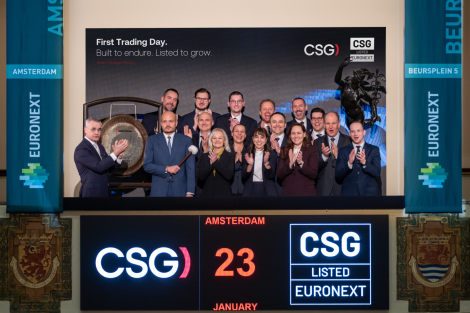 Strengthening Europe’s strategic autonomy through capital marketsCzechoslovak Group lists on EuronextRead more
World’s largest defence IPO ever recorded.
Learn more about Euronext’s initiatives to enhance financing and visibility for European aerospace and defence companies -
Trading
 Where European Government Bonds meet the futureFixed Income derivativesRead more
Trade Mini Bond Futures on main European Government Bonds
-
Clearing
 Step into Europe’s next phase of Repo ClearingRepo ClearingRead more
Euronext is expanding its repo clearing services to boost market access, liquidity provision and collateral optimisation across Europe.
-
CSD
 European CSD modelBuilding the CSD of Choice in EuropeRead more
Euronext Securities is shaping the future of European capital markets by enhancing integration, connectivity, and innovation.
-
Technology
 Euronext Technology SolutionsHigh-Frequency Trading Solution (HFTS)Read more
The new generation of high-frequency risk trading platforms, offering the highest performance with ultra-low latency and minimal jitter, all at a low total cost of ownership.
-
Data
-
Indices
 Access the white paperInvesting in the future of Europe with innovative indicesRead more
The first edition of the Euronext Index Outlook series with a particular focus on the European Strategic Autonomy Index.
-
About Euronext
 Euronext strategic planInnovate for Growth 2027Read more
Shaping capital markets for future generations

Euronext announces June 2025 quarterly review results of the BEL® Family indices
Euronext announces June 2025 quarterly review results of the PSI®
Euronext announces June 2025 quarterly review results of the AEX® Family
Euronext announces volumes for May 2025
“Leading by example”: Euronext’s Aurélie Cohen on the strategic move of Euronext N.V.'s shares to Euronext Securities
On 12 March 2025, Euronext N.V. moved the issuance of its own shares to Euronext Securities in a concrete step in its mission to streamline and unify equity capital markets. This milestone demonstrates the value issuers can derive from joining a pan-European Central Securities Depository (CSD). Aurélie Cohen, Chief Investor Relations and Communications Officer at Euronext, discusses the significance of the move, the rationale behind it and the message it sends to issuers across Europe.
“We wanted to lead by example, to show our clients that migrating to Euronext Securities is not only feasible but beneficial,” says Aurélie Cohen. “By moving our own shares, we have shown that the process can be done smoothly and sets a precedent for others to follow.”
Tackling European post-trade fragmentation
The decision aligns with Euronext’s broader strategy under the ‘Innovate for Growth 2027’ plan, aiming to tackle the long-standing issue of post-trade fragmentation in Europe. With settlement historically scattered across more than 30 CSDs, Euronext’s consolidation initiative is designed to enhance market efficiency and integration.
“By consolidating settlement within Euronext Securities, issuers and investors benefit from greater efficiency, lower costs and simplified access to multiple markets,” Aurélie Cohen explains. “This initiative enhances operational efficiency by streamlining post-trade processes and enabling access to all Euronext markets through one account at Euronext Securities, making it easier to manage operations and reducing the complexity of dealing with multiple CSDs. Additionally, investors can benefit from reduced settlement and custody fees, as well as improved access to European markets via a more integrated infrastructure, ultimately strengthening the global appeal and competitiveness of European capital markets.”
The move is particularly relevant for issuers wondering whether the investment of time and resources is worthwhile. “The effort of the migration was minimal compared to the long-term benefits,” Aurélie Cohen says. “There was a clear roadmap, strong support from Euronext Securities teams and no operational or legal disruptions. We used this opportunity to improve efficiencies for both our internal teams and for our clients." Collaboration between Euronext’s operations, legal and investor relations teams, alongside Euronext Securities and Euroclear France, ensured smooth execution and compliance.
Modernising and consolidating post-trade infrastructure for Europe
Jérôme Blais, Head of European Expansion at Euronext Securities, was also an integral part of this process.
"This migration is a crucial step toward modernising and consolidating Europe’s post-trade infrastructure. We are proud to be at the forefront of this shift, ensuring the migration process for issuers and investors is seamless, cost-effective and beneficial in the long term," he comments.
To support the migration process, Euronext collaborated with Uptevia, a leading provider of tailored issuer services. "Uptevia's expertise in handling transactions and managing securities operations was instrumental in ensuring the smooth and efficient move of Euronext’s shares to the new CSD infrastructure," Jérôme Blais adds.
Mathieu Bourgeois, Head of Development at Uptevia, says, “We are proud to have supported Euronext NV in streamlining its operations by migrating its shares to the new CSD. Our expertise in cross-market operations made the difference. This migration project as well as holding Euronext’s general meeting and the dividend payment under this new innovative set-up proves the success of this long-term collaboration.”
A seamless transition with real benefits for issuers
Importantly, the change in the place of issuance had no impact on shareholders or existing investor CSD arrangements, Aurélie Cohen explains. “From a shareholder perspective, the transition was completely seamless.”
When asked about the real value this brings for other issuers, she remarks: “For companies listed on Euronext markets, this change enables easier access to international investors, reduced settlement and custody fees and a more integrated post-trade infrastructure, which has a positive impact on efficiency, liquidity and long-term investor relations.”
Key benefits for issuers include unified access to all Euronext markets through one account at a single CSD, attractive custody fee schemes, an integrated listing-to-issuance solution, improved shareholder services and a dedicated account manager for all post-trade activities.
Shaping capital markets for future generations
“This is a significant milestone and another step forward in shaping the future of capital markets in Europe,” Aurélie Cohen concludes. “With the infrastructure in place and the benefits clear, now is the time for issuers to begin their own path towards greater integration and operational efficiency.”
By moving the issuance of its own shares, Euronext N.V. simplifies its internal operations and reinforces its leadership role in shaping the future of integrated, competitive European capital markets.
For more information about Euronext’s Central Securities Depository and how it supports issuers, visit the Euronext Securities website or LinkedIn/EuronextSecurities.
For more information about Uptevia, visit Uptevia's website or LinkedIn/Uptevia.
Giocamondo Study lists on Euronext
Euronext highlights water-related indices to empower sustainable finance on World Oceans Day
Each year on World Oceans Day, we are reminded of the critical role oceans and water resources play in sustaining life, economies and ecosystems across the globe. At Euronext, our commitment to empowering sustainable finance means actively supporting investment solutions that promote the health of our oceans and responsible water stewardship.
As part of our ESG commitment to empowering sustainable finance, we are proud to highlight two key Euronext index families that put water and ocean sustainability at the forefront of sustainable investing.
Euronext CDP Water Eurozone EW Index
This index tracks the 50 leading companies in the Eurozone 300 universe with top CDP Water scores under the CDP’s environmental disclosure system, reflecting outstanding water stewardship practices and stringent environmental, social and governance criteria. Constituent companies demonstrate strong governance, social responsibility and environmental commitment, with an ESG rating above the benchmark and a focus on managing water-related risks and eco-efficiency.
Key index highlights:
- ESG performance: The index outperforms its benchmark on overall ESG scores, particularly in governance, while maintaining a strong environmental profile focused on climate strategy, energy management, water risk mitigation and eco-efficiency.
- Social and governance: The index shows low social risk exposures and solid governance frameworks, including monitoring of board independence and anti-corruption policies.
- EU taxonomy alignment: Over 34% of revenues in the index align with the EU taxonomy environmental objectives, reflecting a growing commitment to sustainable economic activities.
By selecting companies that actively mitigate water risks and contribute to sustainable water management, the Euronext CDP Water Eurozone EW offers investors a transparent, equal-weighted exposure to businesses aligned with global water sustainability goals.
Euronext Water and Ocean Europe 40 EW
Designed to track the top 40 companies within the Euronext Europe 500 with the highest environmental performance scores for water and ocean sustainability, this index relies on ISS ESG’s rigorous Water & Ocean scoring framework. It focuses exclusively on environmental factors such as contribution to the UN SDG 6 (Clean Water and Sanitation), water usage efficiency, scarcity management and pollution control.
Key index highlights:
- Selection and composition: Constituents are selected from companies with a minimum free float market capitalisation of €3 billion and sufficient liquidity. Equal weighting promotes diversification and rebalancing occurs annually.
- ESG integration: The index emphasises environmental stewardship and ocean sustainability, making it a specialised benchmark for investors prioritising these critical areas.
- Performance overview: Recent data shows strong returns with an annualised 5-year return of approximately 9.5%, reflecting the resilience of companies leading in water and ocean sustainability.
- Sector and geographic exposure: Top sectors include finance, utilities, consumer discretionary and technology, with key country representation from France, Germany, Spain, Sweden and the Netherlands.
Through its focus on companies driving innovation in water efficiency, pollution control and ocean sustainability, the Euronext Water and Ocean Europe 40 EW offers investors diversified exposure to businesses at the forefront of protecting vital aquatic ecosystems.
Supporting sustainable finance and the Blue Economy
Both indices reflect Euronext’s broader ESG commitment and our role as a leading European ESG index provider. They offer transparent, data-driven tools for investors to align their portfolios with global sustainability goals, including the UN Sustainable Development Goals, particularly SDG 6 on clean water and sanitation.
Celebrating innovation for ocean health with the Euronext Blue Challenge
Euronext’s commitment to protecting ocean health is year-round. As part of our ongoing dedication to the Blue Economy, we recently hosted the Euronext Blue Challenge 2025, empowering young entrepreneurs across Europe to develop sustainable innovations addressing marine and water-related challenges. This flagship initiative highlights the dynamic intersection of sustainable finance, education and environmental stewardship that defines Euronext’s ESG commitment.
Learn more about Euronext’s water-related indices* and the Blue Challenge, and join us in advancing a sustainable future for our oceans and water resources.
*List shows all Euronext’s ESG indices: apply the theme ‘Water’ to see just water-related indices
Repo clearing in Europe: Trends, challenges, and Euronext’s strategic repo expansion
Euronext’s Yama Darriet, head of OTC capture and Repo Expansion Initiative, derivatives and post-trade, discusses the firm’s major step forward in strengthening collateral management and repo clearing capabilities across Europe.
With European capital markets in flux, collateral efficiency and robust repo clearing have never been more critical. The latest International Capital Market Association (ICMA) European Repo Market Survey (Number 48), conducted on 11 December 2024 and published in April 2025, reports that outstanding repo and reverse repo volumes fell to €10,860 billion—a 2.3 per cent decline from June 2024 and the first contraction since mid-2020.
At the same time, the survey showed a slight convergence of outstanding reverse repo vs repo balances, underscoring how European Central Bank (ECB) quantitative-tightening measures and the repayment of targeted longer-term refinancing operations (TLTROs) are expanding available collateral pools and normalising repo rates.
Additionally, the ICMA survey data showed, that against this backdrop of shrinking volumes, electronification patterns are shifting; Voice and bilateral-brokered trades are regaining market share even as dealer-to-customer platforms continue to grow.

Cross-border US dollar (USD) transactions are surging, US Treasury securities (USTs) now dominate collateral pools at record levels, and haircut dynamics are evolving—asset-backed securities (ABS) and financial-corporate haircuts have increased, while covered bonds and mortgage-backed securities (MBS) have seen some relief.
Meanwhile, regulatory reforms—from the European Market Infrastructure Regulation (EMIR) Refit in Europe to the US Securities and Exchange Commission (SEC)’s delayed US Treasury-clearing mandate—are driving firms to rethink collateral workflows and reporting infrastructure.
In the US, as noted previously, the SEC has recently extended the compliance deadlines for new regulations requiring certain US Treasury and repo transactions to be centrally cleared. Reuters reported that, originally set to be phased in by June 2026, the deadlines have been pushed back by a year to 2027 following concerns from US trade associations about possible market disruption. This extension provides firms with additional time to adapt and ensure operational readiness for the new clearing requirements, Reuters reporting concluded.
While Europe does not yet have a similar mandate for central clearing of repo transactions, the developments in the US have sparked discussions among European market participants, a recent risk.net article reported. Notably, the Bank of England (BoE) is actively exploring the potential benefits of mandating central clearing for repo transactions on UK Gilts (UK government bonds), though no formal decision has been made.
According to Risk.net, the BoE has been assessing the implications of such a mandate, particularly considering lessons learned from the 2022 Liability-Driven Investment (LDI) crisis and its recent system-wide exploratory scenario (SWES) stress test. This test revealed that during periods of market stress, banks tend to withdraw from repo markets, limiting liquidity precisely when buy-side firms need it most. Central clearing could mitigate these risks by reducing counterparty credit exposures and enhancing market resilience.
Although the BoE has not yet confirmed its plans, Governor Andrew Bailey has acknowledged that improving financial infrastructure — for example, expanding clearing for Gilt repo — could be a viable policy response to vulnerabilities in the market.
Similarly, discussions are emerging in the European Union regarding a possible government bond clearing mandate, reflecting a broader regulatory trend inspired by US reforms, risk.net’s reporting concluded.
Euronext’s strategic response: Enhancing repo clearing and collateral management
In response to these evolving trends, Euronext is committed to delivering innovative clearing and collateral management solutions that enhance market efficiency and liquidity — not just for repo, but across all asset classes.
A key development in this strategy is Euronext’s recently announced collaboration with Euroclear, its first of several strategic alliances with Tri-party agents (TPAs).
On 11 February 2025, Euronext confirmed the alliance with Euroclear to strengthen its collateral management services. This alliance, and future similar collaborations, will enhance Euronext Clearing by providing clients with automated and adaptable collateral services.
Anthony Attia, Global Head of Derivatives and Post-Trade at Euronext, said of the announcement: “This partnership marks a significant milestone in Euronext’s “Innovate for Growth 2027” strategy, reinforcing Euronext Clearing’s role as a cornerstone of the group's broader strategic ambitions.
It demonstrates our commitment to delivering best-in-class clearing and collateral management solutions for our clients. It is a key milestone in the expansion across Europe of Euronext Clearing’s repo franchise. As we develop Euronext Clearing’s services, we are creating value for stakeholders and positioning Euronext at the forefront of innovation in clearing and collateral management."
Through these TPA collaborations, firms, such as Euroclear, manage the selection, valuation, and substitution of collateral, ensuring compliance with eligibility standards while optimising operational efficiency.
Expansion of repo clearing services
The Euroclear collaboration is a key enabler of Euronext’s upcoming Repo Expansion Initiative; a phased-approach expansion of its repo clearing services; building on the 25-year strong foundation and expertise, where Euronext has been the trusted home of Italian repo clearing. The first phase — the Repo Foundation — is scheduled to launch in June 2025.
This enhanced offering is designed to attract international counterparties and expand Euronext’s repo clearing operations beyond Italy; covering a broader range of European government bonds, including Spanish, Portuguese, and Irish govies in June 2025, followed by German, French, Dutch, Belgium, and Euro-denominated in September 2025. Austrian and Finnish will follow by December 2025.
The Repo Expansion Initiative marks an important milestone in Euronext Clearing’s broader transition from an Italian-focused CCP to a pan-European cross-asset clearing house with membership solutions for both sell and buy-side firms. By providing clearing services across multiple markets and asset classes, Euronext is reinforcing its role in supporting liquidity, collateral efficiency, and risk management across European fixed income and repo markets.
Additionally, this initiative aligns with Euronext’s wider market infrastructure, including the addition of the MTS trading platform; now part of the Euronext group after the acquisition of Borsa Italiana. Notably, repo trading at Euronext, through the MTS trading platform, now sees volumes exceeding 180 billion EUR a day*.
*Internal MTS data accurate as of April 2025.
For more details on the Repo Expansion Initiative, click here.
Market Trends and Regulatory Developments
The Euronext collaborations and the Repo Expansion Initiative coincide with a period of structural change in the European repo market. As the European Central Bank (ECB) ceases reinvestments of maturing bonds from its monetary policy portfolios from January 2025—equivalent to approximately €40 billion per month—the market is undergoing a substantial withdrawal of central bank-provided liquidity.
A Securities Finance Times article highlights a marked resurgence in cash-driven and triparty repo activity. Average daily term-adjusted repo volumes rose by 70% in 2023, increasing from €210.3 billion to €357.8 billion. Over the same period, general collateral and special repo segments expanded by 142% and 38% year-on-year, respectively.
However, growth has moderated in 2024, with a slowdown in overall volumes and a contraction in activity in some segments, reflecting changing collateral dynamics and reduced scarcity in certain sovereign bonds.
At the same time, triparty repo activity has continued to build momentum. As the ECB’s TLTRO III facility winds down, market participants have sought alternative funding sources. This has led to a rise in uncleared triparty repo transactions, with banks re-entering the lending space, corporates increasing their participation, and buy-side firms actively seeking returns through repo markets.
These shifts underscore the growing importance of netting efficiency and collateral optimisation—particularly as spreads between core and peripheral eurozone repo rates continue to compress to historic lows. The full findings are detailed in the April 2025 repo market analysis published in the latest ICMA European Repo Market Survey.
A major step forward
Euronext’s Repo Expansion Initiative marks a major step forward in strengthening collateral management and repo clearing capabilities across Europe. By expanding access to cleared repo markets and reinforcing cross-border infrastructure, Euronext is helping market participants adapt to a rapidly evolving regulatory and liquidity environment.
Findings from the latest ICMA European Repo Market Survey indicate a contraction in outstanding volumes—reflecting the impact of central bank balance sheet reductions and seasonal balance sheet adjustments. Notably, net reverse-repo positioning has dropped to its lowest share of market activity in years, underscoring the importance of efficient collateral reuse and robust clearing solutions.
Looking ahead, repo desks should prepare for ongoing changes in collateral availability amid sustained sovereign issuance and quantitative tightening. Diverging funding dynamics between US dollar and euro markets, the continued push toward market electronification, and shifting post-trade regulatory requirements—such as SFTR and margining rules—are set to reshape operating models and counterparty workflows.
As Euronext continues its journey to a pan-European, cross-asset clearing provider, it is uniquely positioned to support firms navigating these shifts. The growing demand for transparency, resilience and efficiency across funding markets reinforces the critical role of clearing in the next phase of European capital markets.
Please note that since publication, some data included may no longer reflect the latest market developments, particularly considering the significant movements seen during the first quarter of 2025.
Footnotes