-
Listing
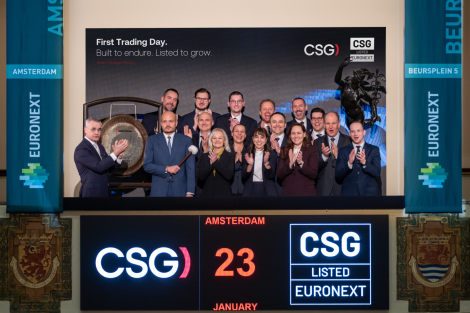 Strengthening Europe’s strategic autonomy through capital marketsCzechoslovak Group lists on EuronextRead more
World’s largest defence IPO ever recorded.
Learn more about Euronext’s initiatives to enhance financing and visibility for European aerospace and defence companies -
Trading
 Where European Government Bonds meet the futureFixed Income derivativesRead more
Trade Mini Bond Futures on main European Government Bonds
-
Clearing
 Step into Europe’s next phase of Repo ClearingRepo ClearingRead more
Euronext is expanding its repo clearing services to boost market access, liquidity provision and collateral optimisation across Europe.
-
CSD
 European CSD modelBuilding the CSD of Choice in EuropeRead more
Euronext Securities is shaping the future of European capital markets by enhancing integration, connectivity, and innovation.
-
Technology
 Euronext Technology SolutionsHigh-Frequency Trading Solution (HFTS)Read more
The new generation of high-frequency risk trading platforms, offering the highest performance with ultra-low latency and minimal jitter, all at a low total cost of ownership.
-
Data
-
Indices
 Access the white paperInvesting in the future of Europe with innovative indicesRead more
The first edition of the Euronext Index Outlook series with a particular focus on the European Strategic Autonomy Index.
-
About Euronext
 Euronext strategic planInnovate for Growth 2027Read more
Shaping capital markets for future generations

Euronext announces volumes for October 2024
Euronext publishes Q3 2024 results
Euronext announces its new strategic plan “Innovate for Growth 2027”
Date
Short Title
Q3 2025 results
Show Detail
Show Detail
Euronext published its third quarter 2025 results on Thursday 6 November 2025, after market closing. The press release and the presentation are available on this page.
An analysts call, hosted by Stéphane Boujnah, CEO and Chairman of the Managing Board of Euronext, and Giorgio Modica, CFO, took place on:
- Friday 7 November 2025 at 09:00 CET (Paris time) / 08:00 GMT (London time).
To listen to the replay of the webcast visit: Euronext Q3 2025 Results
Authored on
4 months 2 weeks ago
Language
English
Name
Q3 2025 Results - Press Release
Thumbnail

Authored by
mkurver@euronext.com
Authored on
4 months 2 weeks ago
Language
English
Name
Q3 2025 Results - Presentation
Thumbnail
Authored by
mkurver@euronext.com
Authored on
4 months 2 weeks ago
Language
English
Name
Q3 2025 Results - P&L
Thumbnail
Authored by
mkurver@euronext.com
Authored on
4 months 1 week ago
Language
English
Name
Q3 2025 Results - Transcript
Thumbnail
Authored by
mkurver@euronext.com
Date
Short Title
Q2 2025 results
Show Detail
Show Detail
Euronext published its second quarter 2025 results on Thursday 31 July 2025, after market closing. The press release and the presentation are available on this page.
An analysts call, hosted by Stéphane Boujnah, CEO and Chairman of the Managing Board of Euronext, and Giorgio Modica, CFO, took place on:
Authored on
7 months 3 weeks ago
Language
English
Name
Q2 2025 Results - Press Release
Thumbnail
Authored by
mkurver@euronext.com
Authored on
7 months 3 weeks ago
Language
English
Name
Q2 2025 Results - Presentation
Thumbnail
Authored by
mkurver@euronext.com
Authored on
7 months 3 weeks ago
Language
English
Name
Q2 2025 Results - P&L
Thumbnail
Authored by
mkurver@euronext.com
Authored on
7 months 1 week ago
Language
English
Name
Q2 2025 Results - Transcript
Thumbnail
Authored by
TAndre@euronext.com
Date
Short Title
2025 Annual General Meeting
Show Detail
Show Detail
The Annual General Meeting (AGM) of Euronext N.V. was held on Thursday 15 May 2025 at 10.30 a.m. CEST at the offices of Euronext N.V. at Beursplein 5, 1012 JW Amsterdam, the Netherlands.
All items on the agenda with the exception of voting item 1 (advisory vote) were approved. These were as follows:
1. Proposal to adopt the 2024 remuneration report
Authored on
11 months 3 weeks ago
Language
English
Name
Euronext NV 2025 AGM agenda
Thumbnail
Authored by
mkurver@euronext.com
Authored on
11 months 3 weeks ago
Language
English
Name
Convening notice 2025
Thumbnail
Authored by
mkurver@euronext.com
Authored on
11 months 4 weeks ago
File
Language
English
Name
Euronext 2024 URD - PDF
Thumbnail
Authored by
jstein@euronext.com
Authored on
11 months 4 weeks ago
Language
English
Name
Euronext 2024 URD - ESEF
Thumbnail
Authored by
jstein@euronext.com
Authored on
10 months 1 week ago
Language
English
Name
Presentation at the AGM by the CEO
Thumbnail
Authored by
mkurver@euronext.com
Authored on
10 months ago
Language
English
Name
AGM voting results
Thumbnail
Authored by
mkurver@euronext.com
Authored on
4 months ago
Language
English
Name
Minutes of the AGM
Thumbnail
Authored by
mkurver@euronext.com
Date
Short Title
Q1 2025 results
Show Detail
Show Detail
Euronext published its first quarter 2025 results on Wednesday 14 May 2025, after market closing. The press release and the presentation are available on this page.
An analysts call, hosted by Stéphane Boujnah, CEO and Chairman of the Managing Board of Euronext, and Giorgio Modica, CFO, took place on:
Authored on
10 months 1 week ago
Language
English
Name
Q1 2025 Results Press Release
Thumbnail
Authored by
mkurver@euronext.com
Authored on
10 months 1 week ago
Language
English
Name
Q1 2025 Results - Presentation
Thumbnail
Authored by
mkurver@euronext.com
Authored on
10 months 1 week ago
Language
English
Name
Q1 2025 Results - P&L (new reporting)
Thumbnail
Authored by
mkurver@euronext.com
Authored on
9 months 4 weeks ago
Language
English
Name
Q1 2025 Results - Transcript
Thumbnail
Authored by
mkurver@euronext.com
Date
Short Title
Full-year 2024 results
Show Detail
Show Detail
Euronext published its fourth quarter and full year 2024 results on Thursday 13 February 2025, after market closing. The press release and the presentation are available on this page.
An analysts call, hosted by Stéphane Boujnah, CEO and Chairman of the Managing Board of Euronext, and Giorgio Modica, CFO, took place on:
Authored on
1 year 1 month ago
Language
English
Name
Q4 2024 Results - Press Release
Thumbnail
Authored by
mkurver@euronext.com
Authored on
1 year 1 month ago
Language
English
Name
Q4 2024 Results - Presentation
Thumbnail
Authored by
mkurver@euronext.com
Authored on
1 year 1 month ago
Language
English
Name
Q4 2024 Results - P&L
Thumbnail
Authored by
mkurver@euronext.com
Authored on
1 year 1 month ago
Language
English
Name
Q4 2024 Results - Transcript
Thumbnail
Authored by
mkurver@euronext.com
Authored on
11 months 4 weeks ago
Language
English
Name
Reconciliation table - New reporting
Thumbnail
Authored by
jstein@euronext.com
ELITE welcomes 19 new firms bringing the total to 2,400 companies
Positions - Options Investing E-learning
Now that you have learned how options work, discover how they can be used in practice. Learn about the financial performance (profit or loss) of the positions you can take when trading options. Understand the different payoffs of calls and puts and long and short positions.
What can options be used for?
Making a profit
Buyers of options expect a change in the price of the underlying value. The buyer of a call option generally expects a rise in the price, while the buyer of a put option may expect a fall. In both cases, the investor can make a relatively larger profit with options than by investing a similar amount in the underlying value, because only the option premium needs to be invested to benefit from price movements in the underlying value. This is known as leverage. If the price of the underlying value rises, the price of call options will usually rise as well. Similarly, if the price of the underlying value falls, the price of put options will usually increase. This makes it possible for investors to make a profit on their options.
Earning extra income
An investor can also decide to write options in order to receive the option premium. Investors who actually own the underlying value can obtain an additional return on their portfolios in this way (for example: sell a call option if you own 100 shares). However, if they are assigned to deliver the underlying value, they must sell the underlying value to the holder of the call option. When holders of put options exercise their rights, the writers have to buy the underlying value.
Protection against price falls
Options also allow investors to protect themselves against falls in the price of the underlying value. Maximum protection is obtained by buying put options. Writing call options gives investors partial protection against decreases in the price of the underlying value, but in this case protection is limited to the amount of premium received.
Fixing the purchase or selling price of the underlying value
Options also make it possible to fix in advance the price at which the underlying value may be traded at a future date. For example, an investor who wants to set a maximum purchase price will be interested in buying call options. An investor who wants to set a minimum selling price will be interested in buying put options.
Exposure to the full underlying value
When buying options, the investor is not initially required to pay the notional value of the contract, but just the premium, while exposure is on the full underlying value. In this way leverage is created. Investors pay a relatively small premium instead of investing a large investment by buying stocks, bonds or commodities.
Long call, buying call options
Buyers of call options can benefit from increases in the price of the underlying value during the lifetime of their options because they have the right to buy the underlying value at a fixed price.
Possibilities
If the price of the underlying value rises, the options holder must take steps to realise the profit on the option. There are two possibilities:
- The options holder can sell their options on the derivatives market. The holder’s objective in this case is normally to benefit from the increase in the option premium instead of acquiring the underlying value. In general, the price of a call option increases in line with the price of the underlying value. The profit in this case consists of the proceeds from the sale, less the original option premium and transaction costs paid. Because of leverage, a small rise in the price of the underlying value can generate a high profit (in percentage terms) on the original investment, and vice versa.
- Options holders can exercise their options. Remember that American-style options can be exercised at any time during the lifetime of the option, while European-style options can only be exercised on the expiration date. Depending on the specifications of the option, either the underlying value is delivered when the option is exercised, or settlement takes place in the form of cash.
Risk – Maximum loss
If there is no increase in the price of the underlying value, call option holders can lose their entire investment, i.e. the option premium plus the transaction costs. This is the maximum possible loss that buyers of call options can incur.
Short call, selling call options
Sellers of call options take on the obligation to sell the underlying value at the exercise price, if assigned to do so. In return, they receive the option premium.
Possibilities
Selling covered call options
The main objective for investors who sell call options on an underlying value which they own (covered call options) is to obtain an extra return on their investment portfolio by receiving the option premium. A consequence of this is that the investor must accept the risk of having to sell the underlying value at the strike price. If the price of the underlying value falls below the strike price, the option may expire without being exercised and the option seller will retain the premium. The seller can also liquidate a position through a closing buy transaction on the derivatives market. However, if the price of the underlying value rises above the exercise price, there is a good chance that the call option will be exercised. The seller will then be required to deliver the underlying value. In addition to earning income from the option premium, investors may decide to sell call options as a means of fixing a selling price for the underlying value. The selling price is then equal to the strike price plus the premium received, less costs. If the option is not exercised, the investor does not have to sell the underlying value.
Selling naked call options
Investors who sell call options on underlying values which they do not own (naked call options) should be aware that they run a potentially unlimited risk. If the price of the underlying value rises above the exercise price, there is a good chance that the call option will be exercised. Option sellers will then be required to sell the underlying value at the exercise price. Because sellers of naked call options do not own the underlying value, they will have to buy it first at the market price, which will be higher than the exercise price. The increase in the price of the underlying value can, in theory, be unlimited, which means that the seller of a naked call option runs an unlimited risk. Sellers of naked call options must therefore have the financial means to purchase and deliver the underlying value if the option is exercised. To guarantee this, they have to provide an amount of margin.
Risk – only suitable for experienced investors
Because of the large losses which may be incurred, selling call options is only suitable for experienced investors who have the financial means to sustain such losses. The extent of the seller’s risk depends largely on whether the options are covered or naked. Sellers must therefore provide collateral. If the options are covered, the underlying value is held as collateral. If the options are naked, margin must be deposited. Sellers of call options (covered or naked) who expect to be required to deliver the underlying value because of a rise in its price may be able to avoid delivery by concluding a closing buy transaction on the derivatives market before being assigned to make the delivery.
Long put, buying put options
Buyers of put options can benefit from a price drop in the underlying value which may occur during the lifetime of their options.
Possibilities
If the price of the underlying value falls, put option holders who wish to profit from this price movement can choose between the following alternatives:
- The options holder can sell their options on the derivatives market. In this case, the profit consists of the increase in the option premium. In general, the price of a put option increases as the price of the underlying value falls. The profit consists of the proceeds from the sale, less the original option premium and transaction costs paid. Because of leverage, a small fall in the price of the underlying value can generate a high profit (in percentage terms) on the original investment.
- Option holders can exercise their options. Remember that an American-style option can be exercised at any time during the lifetime of the option. A European-style option can only be exercised on the expiration date. Depending on the option specifications, the underlying value is delivered when the option is exercised, or settlement takes place in the form of cash.
Risk – Maximum loss
If there is no fall in the price of the underlying value, or if the price of the underlying value increases, put option holders can lose their entire investment (i.e. the option premium plus the transaction costs). This is the maximum possible loss that buyers of put options can incur.
Short put, selling put options
Sellers of put options take on the obligation to buy the underlying value at the exercise price, if assigned to do so. In return, they receive the option premium.
Possibilities
The main objective of investors who sell put options is to receive the option premium. A consequence of this is that the investor has to accept the risk of having to buy the underlying value at the strike price. If the price of the underlying value rises above the strike price, the option may expire without being exercised and the seller will retain the premium. As long as the option has not been exercised, the seller can liquidate the option position with a closing buy transaction on the derivatives market. However, if the market price of the underlying value drops below the strike price, the put option may be exercised. The seller will then be required to buy the underlying value at a price that is higher than the current market price. In addition to making a profit on option premiums, the investor may also consider selling put options as a means of fixing a purchase price for the underlying value. The purchase price is then equal to the strike price, less the option premium, plus costs. If the option is not exercised, the underlying value will not be delivered and the investor will keep the profit earned on the option.
Risk
The seller of a put option accepts the risk of having to buy the underlying value at a price that is substantially higher than the current market price. A sold put option is always naked. The investor must therefore have the financial means to pay for the underlying value in the event that the option is exercised, and hence has to provide the margin. Sellers of put options who expect to have to take delivery of the underlying value because of a fall in its price can avoid doing so by concluding a closing buy transaction on the derivatives market before being assigned.
Option buyers and sellers: the transfer of risk
Each derivatives contract involves a buyer and seller. They are (indirectly) each other’s counterparty. What one party makes on the contract is lost by another party. No value or wealth will be created by the deal itself. Trading in derivatives will only result in the transfer of risk or financial result.
There are risks involved in buying and selling options. Investors should not buy options unless they can afford to lose the premium they have to pay. Nor should they write naked options if they are not in a position to sustain a substantial financial loss.