Back

During the 2023 AGM (annual general meetings) season, Euronext Securities supported over 425 AGMs ensuring the smooth conduct of the events and providing exceptional shareholder engagement regardless of the format of the meeting (traditional in-person, virtual or hybrid.) Now that the 2023 annual general meeting (AGM) season has ended, our experts look back at the season and see what this year’s experiences tell us about the future of the physical AGM.

Will virtual AGMs win the day?

Bjørn Stendorph Crepaz, Head of Issuance & Issuer Services Euronext Securities, believes there are two basic factors that speak in favour of virtual AGMs, or VGMs (Virtual General Meeting).

The main advantage we hear when it comes to choosing a hybrid or fully virtual solution is accessibility. All investors, regardless of their location or circumstances, have an equal opportunity to attend and participate in the meeting. That is also the explanation that companies, who opted for a VGM this year, gave. And it makes sense that this would be a compelling argument for large companies with an international shareholder base.

There are other factors related to trends in share ownership. “Something else that will have a bearing on how AGMs develop in the future is the demographic shift in share owners. If, as some industry experts believe, the average age of share owners continues to fall, so that we see younger, more tech-savvy generations becoming active investors in the stock market, then we can imagine that this development will further accelerate the push towards fully virtual meetings,” Bjørn Stendorph Crepaz says.

Physical AGMs and the local investor

Whether or not companies opt for a physical AGM also has a lot to do with the company- and local culture. “Many companies still use the AGM as a marketing and branding opportunity,” Marianne Benedict explains. “In Denmark, for example, it’s a part of fostering a strong local investor culture, and is a way for smaller investors to show their commitment to and engagement with the companies they invest in.” For these companies, there is still a feeling that virtual solutions lack the personal feel of the in-person AGM. “It can be difficult to replicate the feeling of a community celebration on a digital platform,” she says.

Hybrid AGMs – the best of both worlds?

Which brings us to the solution that Euronext Securities’ experts highlighted as the way forward at the end of last year’s AGM season: a hybrid solution. “The hybrid model is ideal in that it allows companies and investors flexibility,” says Marianne Benedict, Head of Issuer Services at Euronext Securities Copenhagen. “For professional investors who might have several AGMs to attend during a season, it makes it possible for them to attend more meetings even if they are spread out over a wide geographic area, because they have the option of attending virtually. And companies can maintain the close connection with their local investors who choose to attend in person.

Based on our experience, the only definite conclusion we can draw, according to Marianne Benedict, is that it’s still early days after the pandemic. “What’s clear after this year’s AGM season is that we’re still in a transition phase,” she says. “Pandemic restrictions are behind us, but we still haven’t defined what form the post-pandemic AGM will take.”

According to Pierre-Edouard Borderie, Head of Euronext Corporate Services, a subsidiary of the Euronext Group “companies tend to move more and more towards hybrid and virtual AGMs. In 2022 more than 35 companies chose Company Webcast webinar solution, to broadcast their AGM. This year, already 44 companies have broadcasted their AGM via Company Webcast.”

In Italy, Euronext Securities is a new player, having entered the marketplace just over a year ago with its value-added solution for managing the full lifecycle of general meetings. As Simone Canova, Business Development Manager, Issuers – Euronext Securities Milan explains, the pandemic pushed companies to adopt more flexible options in managing their AGMs and this triggered the government to regulate these options. A temporary pandemic regulation was created, (and has recently been extended to the 2023 AGM season), to allow companies to appoint a Designated Shareholder Representative, thus providing a mechanism for shareholders to be represented and have their voices and votes counted even if absent from the general meeting. This has created a unique opportunity in Italy, where Euronext Securities can be entrusted to act as an intermediary between the company and its shareholders, expanding its duties to include proxy voting, ensuring compliance with regulatory requirements, and providing expert guidance on corporate governance matters to guarantee transparency and integrity throughout the entire process.

Full GM support – regardless of the format

Euronext Corporate Services recommends that issuers acquire the most accurate mapping of their shareholders prior to the general meeting. This exercise aims to identify who will be present at the AGM, what will be the topics of interest and what voting results can be anticipated.

Whether the 2024 season brings a marked increase in physical meetings, virtual or hybrid, Euronext Securities’ Investor Services team is ready to provide clients with the necessary support.

We’ve worked closely with our clients both before, during and after the pandemic to create flexible AGM services that can be tailored to their specific needs, whether they’re opting for a physical, virtual or hybrid solution,” Marianne Benedict says. “So, whichever format they choose for next year’s AGM season, we’ll be ready.

To learn more about Euronext Securities’ general meeting services, contact your local team [1]

To learn further about Shareholder Analysis, Euronext Corporate Services’ shareholder identification tool please visit the website:

Analyse your shareholding structure with Shareholder Analysis (euronext.com)

The 2023 AGM season in numbers

  • AGMs held +425:
  • Highest attendance at a hybrid AGM: +580
  • Highest attendance at a physical AGM: +1,600
  • Proxy instructions processed increased by 10,500 from 2022 to 2023
  • Companies using Company Webcast as their webcast provider: +700

Changes in Danish legislation increase represented capital at AGMs

The 2023 AGM season was also the first after changes to Danish legislation regarding proxy voting went into effect. “This change means that investors*[2]  no longer have to present a power of attorney in connection with exercising their voting rights. The power of attorney must be in place between the investor and the bank/custodian and due to the SRDII implemented rules all custodians in the custody chain have an obligation to process without being presented for a power of attorney” Marianne Benedict explains. “This means that a higher proportion of instructions go through, and the represented capital is higher at this year’s general meetings than last year’s.” For example, during the 2022 AGM season, 44% of proxies were deemed invalid, meaning a loss of 5500 instructions. This year, Euronext Securities Copenhagen has seen an increase in valid voting instructions of 20-60% per AGM. The change in legislation together with further focus on active ownership increased participating proxy capital by 61% increase and total participating capital increased by 20%. 


[1]Contact

Your local team contact


 [2]*Only investors who have their holdings via a chain of custodians which is the case for most foreign investors. Domestic investors can exercise their rights directly.

Achieving net zero

04/09/2023

Achieving net zero: the perspective for corporates and investors on the path to a carbon-

  • Seminar
  • Italy

Back

Stay updated on all your shareholders and their behavior

Christian A. Viken

We provide updated shareholder register data on securities traded on Euronext VPS-registered securities on the markets – Oslo Børs, Oslo Axess, Marker Market and N-OTC.

Our registry is daily updated giving the market available information regardless of whether the change is mandatory or not. This provides an unique insight into the change in the ownership structure of companies that have not previously been available to the market, thus strengthening the purpose of public investor registers.

To get a full overview, please see the three product below or check out all our Data Services products.

All data services

Back

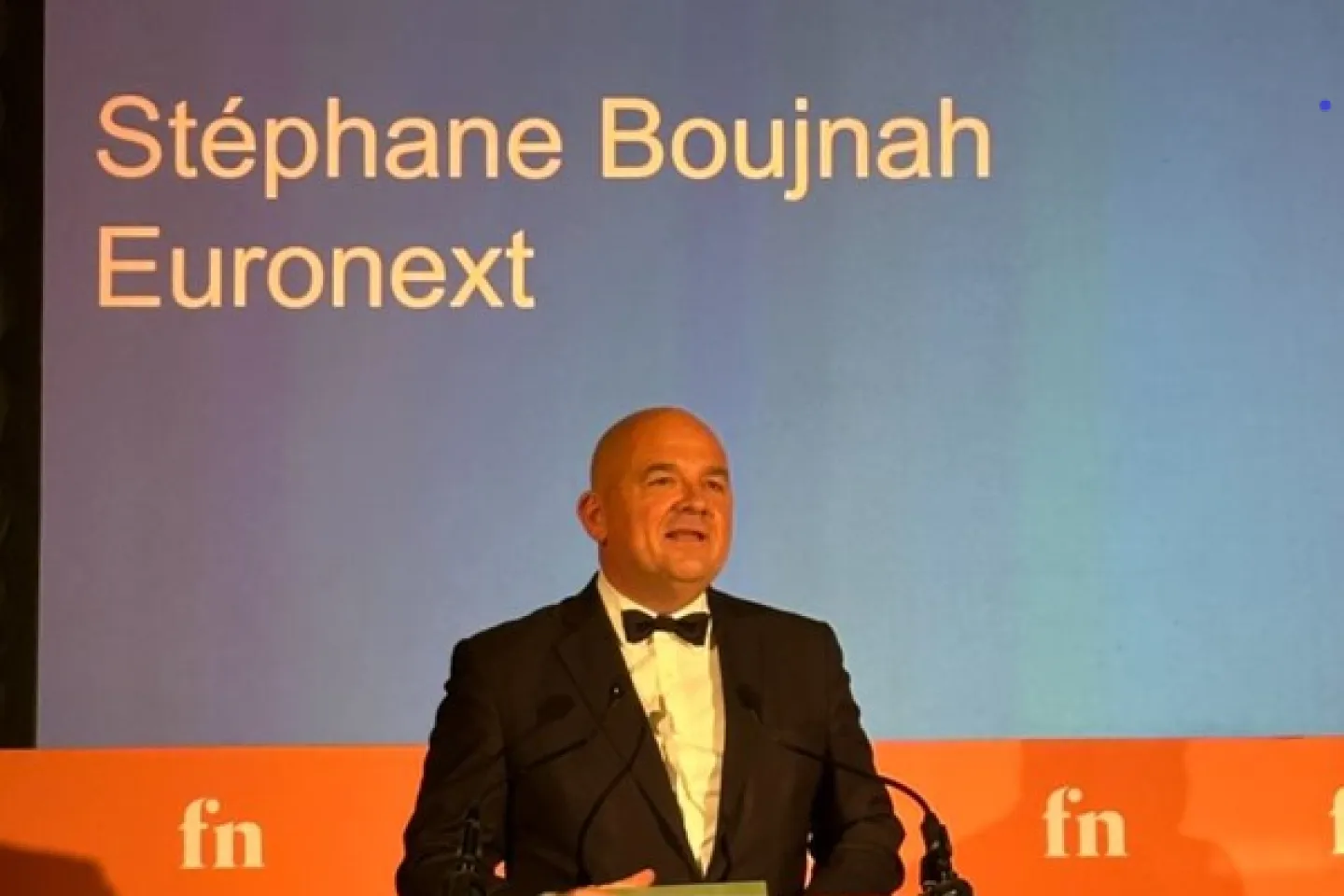
Euronext’s CEO Stéphane Boujnah received the Outstanding Contribution Award 2023 at Financial News’s Trading & Tech Awards in London earlier this month.

A vision for Euronext

Stéphane Boujnah’s vision for Euronext has seen him realise an ambitious expansion and diversification strategy to establish Euronext as Europe’s leading market infrastructure, while significantly increasing the operating performance of the Group. Euronext now counts seven exchanges, four CSDs and one clearing house. It thus manages activities across the entire capital markets value chain, operating under a highly scalable and diversified model that is designed to provide value for customers and stakeholders.

Maintaining the bond between the UK and the EU

In his acceptance speech at the FN Awards, Mr Boujnah told the London trading scene of the importance he places on maintaining the bond between the UK and the European Union, despite Brexit. Euronext remains very present in London and in fact its teams there have increased since Brexit, in part with the acquisitions of MTS Markets, through the 2021 Borsa Italiana acquisition, and FastMatch, now Euronext FX, and also through organic growth.

Delivering pan-European harmonisation

Under Stéphane Boujnah’s leadership, Euronext has become established as the leading platform for the financing of the real economy in Europe. As part of the Group’s project and mission to build the backbone of the EU Capital Markets, Euronext has developed and successfully delivered ambitious pan-European projects.

These include the European expansion of Euronext Clearing, operating and enhancing Europe’s third-largest CSD network Euronext Securities, and the harmonisation of listing rules on the markets the Group operates, in line with the objectives of the EU Commission’s Listing Act. They also include the Data Centre migration from Basildon in the UK to a new green core data centre in Bergamo, Italy, which handles 25% of European equities trading.

With the acquisition of Borsa Italiana Group, Mr Boujnah has established Euronext as the largest listing venue in Europe, attracting the majority of European and international listings, with an aggregated market capitalisation of companies listed on Euronext markets twice that of LSEG and three times that of Deutsche Börse.

The Group has also diversified to cover additional asset classes including Euronext FX in currencies, Nord Pool in energy, Fish Pool in agricultural commodities and MTS in fixed income, as well as a broadened corporate services offering that supports companies at all stages of growth.

A mandate to continue

Mr Boujnah was recently reappointed as CEO and Chairman of Euronext’s Managing Board for a four-year mandate, and will continue to lead the teams at Euronext to deliver on the Group’s Growth for Impact 2024 strategic plan and to prepare the next strategic cycle, shaping capital markets for future generations.

The Euronext Group’s mission is simple: to connect European economies to global capital markets, accelerating innovation and delivering sustainable growth.


Euronext CEO Stephane Boujnah speaking at awards ceremony


Back

What are Warrants & Certificates, the different types available on the market and how to navigate through them?

Alexandre Atlani, Head of Warrants & Certificates at Euronext answers these questions.

Listen to the full interview, watch the video:


What are warrants & certificates?

Warrants and certificates are classified by the European regulation MiFID 2 as “Securitised Derivatives”.

Unlike derivative contracts, they are not issued by an exchange but they are created by an issuer, usually a large financial institution.

Warrants can be compared to options, in terms of pay-off and risk but there are many other types of warrants and certificates which don’t have their counterpart in the derivatives world.

Warrants and certificates are mainly tailored for retail investors. They allow them to take positions on many types of underlyings: indices, equities, commodities, fixed income, etc.

They also allow them to take strategies with more or less risk and yielding more or less return. As well, investors can access a wide geographical coverage of underlyings allowing them to trade or take positions on foreign underlyings without having to pay cross-border fees or commissions.


What are the different types of Warrants & Certificates available on the market?

There are many types of warrants and certificates. Some offer leverage, some don’t.

  • Leverage allows to magnify the variations of the price of the underlying, either in a positive way if in the same direction as the investor’s strategy, or in a negative way if in the opposite direction of the investor’s strategy.
  • Some instruments can have a fixed or constant leverage, a fixed or constant leverage, some have a variable leverage.
  • Some instruments will appreciate (or depreciate) in a short amount of time, or with a small variation of the price of the underlying.
  • Some instruments will have a bullish strategy (or upward), some products will be adapted for a bearish (or downward) strategy, and some products will be used for a neutral strategy.
  • Some products will be only sensitive to the variations of the price of the underlying while some other instruments or product types will be sensitive not only to the price of the underlying but as well to the time passing by, to the volatility of the price of the underlying, to changes in the interest rates, or changes in the dividend rates.
  • Finally, some instruments can have a knock-out barrier (or kill switch), which will early expire or deactivate an instrument rendering it worthless.

How to navigate the different types of Warrants & Certificates?

Over the years, naming standardisations have been implemented to navigate across the many different types of products. This mostly under the influence of industry associations, issuers and stock exchanges. Nowadays, the mostly used classification is that of EUSIPA: the European Structured Investments Products Association.

This is a three-level classification where each product type is associated to a 4-digit code.

  • The first digit, whether 1 or 2 will indicate if the product is an investment or a leverage product.
  • The second digit will provide a bit more granularity for investment products for example, we will know if it’s a capital protection product, a yield enhancement, a participation or a credit linked note and for leverage products, whether it is one without knock-out or with knock-out or a constant leverage product.
  • The third and fourth digit will provide even further granularity.

On Euronext’s website live.euronext.com, investors can find the EUSIPA code and EUSIPA name of each warrant and certificate listed and traded on Euronext.

Back

On 30 May 2023, Euronext was awarded “Best Pan-European Index Provider 2023” as well as the “Excellence Award for Robust Biodiversity Solutions 2023” at the Ethical Finance Awards.

The W&F Awards showcase the key players in the finance industry who are committed to ethic and sustainability in their daily business practices.

Ethical Finance Awards shines a light on the key players in the finance industry who are not only committed to excellence in their day-to-day business practices, but also ensure that those practices are ethical, sustainable, and eco-friendly.  And this award strives to become a guide to banks, investment firms, mortgage brokers, insurers, and pension providers that have adopted ethical practices across their businesses.

The winners have been determined via a process of research and shortlisting, completed by international experts. The criteria with which experts assess nominees is purely merit-based, selected due to the performance, customer service and innovation within their field rather than external factors like the number of votes.

These two sectoral recognitions demonstrate the relevance of Euronext's index-based offering for market players.

Euronext has been offering a large range of ESG, ESG Blue-chip and thematic indices since 2008

Euronext has been pioneer in the index space with advanced solutions starting with the launch of its first low carbon index back in 2008 -now compliant with the Paris Agreement. Alongside its index solutions to continue supporting the growing demand for investment solutions that include ESG, Thematic, Alternative energy and other trends, Euronext offers a full suite of climate and biodiversity-focused products and solutions aligned with EU Climate benchmarks, EU ESG/SRI labels and the different EU regulations framing the ESG space.

Discover our key ESG indices

Euronext has also been innovating ever since, by developing a wide suite of ESG blue-chip indices, designed to complete the ESG offering in our blue-chip franchise and innovative thematic indices.

Find out more about our range of indices

With more than 15,000 ETFs, funds and derivatives associated with our indices and billions of assets under management, Euronext’s ESG, climate, wealth and ethical indices are used by financial institutions and tracked by ETFs and structured products all around the world.

Euronext has extensive expertise across ESG and thematic indices and is strongly engaged in supporting the financial sector’s sustainable transition.

For further information, contact us at index-team@euronext.com

Back

Learn more about the risks and safeguards you need to know regarding Non-Fungible Tokens (NFTs)

FTA Online News

With the growing popularity of NFTs, it is essential that users understand the risks and safeguards.

The rights embedded in an NFT

An NFT is a non-fungible token which collects a set of digital information within a blockchain and confers ownership rights on a given person.

The tokenisation process converts rights to a real or digital asset, such as a work of art, into a digital token recorded on a blockchain, through a smart contract that connects the asset to the token and creates a verifiable digital scarcity of digital ownership.

Blockchain ensures that each token is not replicable or modifiable and “certifies” the ownership declaration of the token, but not of the real work of art. It is therefore crucial to understand which rights you are buying with a given NFT.

Infringement of intellectual property rights

A smart contract is included in the design of NFTs, and is executed when certain requirements are met. In this way, the intellectual property and the authenticity of the work represented through the NFT are protected: this happens when the author or artist of the work creates an NFT connected to the work. By virtue of NFTs, it is possible to grant a certificate of authenticity and to trace subsequent exchanges.

It may nevertheless happen that the person who mints the NFT does not have the permission of the artist or the creator of the work. A recent example is the case of Nike suing the reselling platform StockX for the unauthorised sale of 500 NFTs depicting Nike sneakers.

Before acquiring an NFT, it is therefore necessary to verify the “match” between the identity of the artist who created the work and the person who is selling it. This test can be provided by linking a certificate of originality to the smart contract included in the NFT.

The resale right for NFTs

The resale right is the right of the artist to benefit from the works they created even after selling or assigning them, participating in any increase in their value over time and in subsequent assignments.

Including a smart contract within an NFT that provides for the application of percentages on subsequent sales, allows the original author to monetise these over time. At the same time, the presence of this clause implies potential lower revenue for the buyer of the asset at the time of a future sale.

Ultimately, therefore, a buyer of an NFT will have to take into account all typical problems relating to copyright and resale rights which are typical of works of art and which are analysed in more detail in the article on taxation of NFTs.

Wash trading of NFTs

Another risk when buying a NFT is related to illegal price manipulation practices: this is the phenomenon of wash trading, a transaction carried out by some sellers to increase the value of an NFT artificially. In practice, the seller sells the digital asset to themself, transferring it to another wallet which they own, thus illegally inflating the value of the NFT and leading interested users to believe that it is an object with speculative potential. For a market that, while declining, registered transactions of more than $44 billion in 2021, the danger is real. According to Chainalysis, during 2021, around $8.9 million in profit was made from “wash trading” activities on NFTs.

Buying and selling NFTs safely

The lack of regulation of the NFT market also means that there can be fraudsters and speculators among NFT investors. Investors approaching the world of NFTs for the first time should therefore follow certain rules:

  1. The value of NFTs fluctuates over time: do not let yourself be carried away by the market, but always remain aware of the objective of the investment.
  2. Choose Marketplaces that are considered to be safer and more regulated.
  3. Open secure wallets and be sure to store NFTs in multiple secure wallets with advanced encryption systems.
  4. Seek documentation on NFTs of interest, checking out communities of fans.
  5. Be aware of phishing, links, emails or fraudulent messages that lead users to share sensitive information that can lead to theft of NFTs from the wallet.

NFTs: the risk of Ponzi schemes

Like all investments in markets with little or no regulation, NFT investments carry several risks. In particular for NFTs, many of these risks can be compared to those typical of investments in works of art: from the problem of authenticity to that of copyright and resale rights, from the value of the investment over time (often linked to unforeseeable and subjective factors) to any concrete relationship with the work of art linked to the token, whether digital or physical. Various observers have also highlighted the risk of pyramid schemes, better known as Ponzi schemes, which could create asset bubbles and significant losses.

There is indeed a risk related to pyramid schemes, but it is not too specific due to some typical features of NFTs. The typical Ponzi scheme works more or less as follows: an entity creates a fund and issues its units on the market, which are subscribed by various investors. Instead of paying investors back with investment outcomes, the pyramid scheme uses resources received from new subscriptions. The more successful the fund is, the more new investments rain down, remunerating old investors, starting at the top of the pyramid and then gradually trickling down to the most recent ones.

When subscriptions drop or some real investment goes badly, however, the game breaks down and the truth emerges overwhelmingly, as in the famous case of Bernie Madoff. Even the crypto world has witnessed giant Ponzi schemes, such as that of OneCoin, with which the Bulgarian criminal Ruzha Ignatova stole as much as $5 billion before fleeing. There were also the cases of BitConnect and PlusToken. There are many more cases of fraud and the Washington Post has even listed six warning signs: implausible returns (e.g. 1% a day), promoters flaunting an affluent lifestyle, proprietary secrets that block transparency on tools, proselytizing drives, participants who boast of large gains, the difficulty of liquidating investments at a given point.

In fact, NFTs have some features that make them favourable for the creation of Ponzi schemes, but have other features that hinder this. NFTs are difficult to value (like a work of art in many cases), can initially deliver very high returns, still have vague and uncertain regulation, are new and therefore less well known and easier to use to devise scams. At the same time, however, NFTs are by definition unique (although the buyer must carry out all the necessary checks), so they are not as fungible as the shares of a fund which conceals a Ponzi scheme. The life cycle of an NFT normally goes from the creator (artist) to the seller (auction house and similar) to the buyer (investor), with each NFT having its own path, so that it is difficult to include it within a pyramid scheme which provides for a close link between all NFTs and their owners over time.

NFTs: the risks of MLM (multilevel marketing)

Another controversial selling practice is that of multilevel marketing (MLM), which is legal in Italy within certain limits, unlike Ponzi schemes or chain letters, but is often compared to and merges into Ponzi schemes. This consists of a distribution system in which a company not only sells its products to customers, but also encourages them to sell their products in exchange for profits. A chain is thus constructed in which a large proportion of profits move upwards, while greater pressures persist on the base.

This can happen in the world of NFTs, such as in the case of special collectible NFT PFPs. PFP is the acronym for Photo for Profile, and recently, several such images, real avatars, have absorbed an important part of the NFT market, as in the case of the CryptoPunks and Bored Ape Yacht Club series. The success of these profiles has generated a strong market which, as often happens, has fed on the prestige associated with certain successful NFTs or the fear of being cut off from a trend (fear of missing out, or FOMO). This has triggered mechanisms similar to multilevel marketing in the purchase and sale of these NFTs.

Every time a fashion is created and spread, there is a danger of multilevel marketing mechanisms, pyramid schemes, speculation and fraud. The world of NFTs evidently also faces these dangers.

Learn more about NFTs

NFT (Non-Fungible Token): cosa sono e come funzionano - Borsa Italiana

NFT: qual è la differenza tra token fungibili e token non fungibili - Borsa Italiana

La fiscalità degli NFT - Borsa Italiana