-
Listing
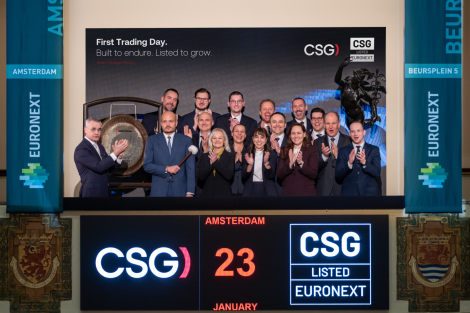 Strengthening Europe’s strategic autonomy through capital marketsCzechoslovak Group lists on EuronextRead more
World’s largest defence IPO ever recorded.
Learn more about Euronext’s initiatives to enhance financing and visibility for European aerospace and defence companies -
Trading
 Where European Government Bonds meet the futureFixed Income derivativesRead more
Trade Mini Bond Futures on main European Government Bonds
-
Clearing
 Step into Europe’s next phase of Repo ClearingRepo ClearingRead more
Euronext is expanding its repo clearing services to boost market access, liquidity provision and collateral optimisation across Europe.
-
CSD
 European CSD modelBuilding the CSD of Choice in EuropeRead more
Euronext Securities is shaping the future of European capital markets by enhancing integration, connectivity, and innovation.
-
Technology
 Euronext Technology SolutionsHigh-Frequency Trading Solution (HFTS)Read more
The new generation of high-frequency risk trading platforms, offering the highest performance with ultra-low latency and minimal jitter, all at a low total cost of ownership.
-
Data
-
Indices
 Access the white paperInvesting in the future of Europe with innovative indicesRead more
The first edition of the Euronext Index Outlook series with a particular focus on the European Strategic Autonomy Index.
-
About Euronext
 Euronext strategic planInnovate for Growth 2027Read more
Shaping capital markets for future generations

Euronext announces March 2024 annual review results of the BEL® Family indices
Euronext announces March 2024 review results of the OBX® Family
Euronext announces March 2024 annual review results of the PSI®
Euronext's commitment to gender equality: Building a better future
At Euronext, we are deeply committed to diversity, inclusion, and gender equality.
In line with the UN's theme for International Women’s Day 2024, "Invest in Women: Accelerate Progress”, we are determined to create positive change within Euronext and in the communities and ecosystems we are part of. From signing the UN Women's Empowerment Principles to establishing the Euronext Women's Network, our actions aim to make an impact to improve inclusivity.
International Women’s Day celebrations
As we mark International Women’s Day, we stand with the movement for gender equality. Throughout March 2024, Euronext will host initiatives to promote gender equality towards a future where every individual can reach their full potential. Our markets will join the 'Ring the Bell for Gender Equality' campaign, raising awareness worldwide. We will host diverse events across our locations, engaging both customers and our own staff to foster dialogue, share experiences, and cultivate a culture of inclusivity and mutual support. At the same time, as we celebrate the first anniversary of our Women's Network, we recognise achievements across our locations and will strengthen our initiatives introducing specialised internal training programmes such as “Know Your Strengths to Boost Your Development” to empower our workforce.
Mentorship and Education
Mentorship is key to our diversity efforts, fostering a supportive environment for everyone. Through training and mentorship, we aim to empower everyone to grow and thrive. In 2023, 46% of participants in our mentoring programmes were women, demonstrating our commitment to equality and support for women in the workplace. Education is also vital for an inclusive workplace. In 2023, over 400 employees have undergone unconscious bias training to promote fairness.
Our efforts to boost female participation are showing positive results. Our latest employee survey confirms that our people appreciate our commitment to diversity and inclusion, with almost 90% of Euronext employees believing that management genuinely supports equality between genders.
Moving forward
Every step towards gender equality is a step towards a better future. Let's stand together for change and create a world where everyone has equal opportunities. International Women's Day is a reminder of our progress towards gender parity and the work that remains ahead.
More International Women's Day
ELITE launches its second group of leading companies in Portugal, growing Euronext’s large private market ecosystem
Euronext announces March 2024 annual review results of the AEX® Family
The latency costs of Dark MTFs on continental stocks: How kilometres translate into basis points
Pages: 18
Publication date: 24 February 2024
Authors: Paul Besson, Head of Quantitative Research & Anatole Casimir, Quant Research Analyst
In this Quant Research report, we look at implicit latency costs of London-based Dark MTFs for trades on stocks listed on Euronext, whose data centre is located in Italy.
Did you know you are paying a latency tax?
The matching engines of continental Primary Markets are located in Europe, hundreds of kilometres away from London-based Dark MTFs.
It takes 7-8 milliseconds for MTFs to import Euronext Mid-Point prices from Euronext’s Data Centre in Bergamo to London.
31% of Dark trade prices on MTFs are stale on Euronext-listed stocks, and the Opportunity Cost per stale Dark trade amounts to 1.0 tick and 2.3 bps. The overall expected Implicit Latency Cost for a passive Dark trade therefore amounts up to 0.69 bp for a participant unable to benefit from favourable stale trades.
How can you avoid it?
We encourage Sell-Side and Buy-Side institutions to conduct bespoke estimates on their proportion of stale Dark trades, and on their Implicit Latency Costs.
Nevertheless, Euronext’s new Dark trading functionality - Euronext Mid-Point Match - will have no latency; therefore, its total trading cost will amount to only 0.3 bp, as no participants will be exposed to Latency Costs.
For more information and to receive a copy of the report, contact QuantReports@euronext.com
To connect to Euronext Mid-Point Match, contact EquitiesTeam@euronext.com and check out our webpage.
Position management - Options Investing E-learning
The holder of an option has the right to buy or sell the underlying asset at a specified price, while the seller of the option has the potential obligation to buy or sell the underlying asset. Learn what it means to open a position and how it can be closed.
Understand the consequences of buying and selling options.
Positioning Management explained in detail
How does an option work
A right to buy or an obligation to sell and vice versa.
What is an option? An option gives the buyer the right, during a fixed period, to buy (call option) or sell (put option) a specified amount of the underlying asset at a fixed price. On Euronext’s derivatives market, options are traded on various underlying assets such as shares, indices, and commodities. The underlying asset of an options contract is also known as the “Underlying Value”.
An investor who buys an option concludes what is known as an opening buy transaction, and is called the buyer. An opening buy transaction creates a long position in call or put options. Each option gives the holder the right to buy (call option) or sell (put option) a specified amount of the underlying value at a fixed price. The investor can liquidate this position by means of a closing sell transaction.
An investor who sells an option is called the writer. The writer concludes an opening sell transaction which creates a short position in call or put options. The writer of an option has the obligation, if assigned, to sell (call option) or buy (put option) a specified amount of the underlying value at a fixed price. Note that exercising some types of options does not result in physical delivery of the underlying value but in cash settlement.
Open positions can be closed before maturity
An investor who has previously sold (written) an option, but wants to be released from the resulting obligation to buy or sell the underlying value, can do so by means of a closing buy transaction. Writers can do this up until the point that they have been assigned, i.e. called upon to meet their obligations. When investors write call options on an underlying value that they own (and are therefore agreeing to sell at a fixed price if assigned to do so), these options are regarded as covered options.
Investors can also write call options without actually owning the underlying value. If the option is then exercised, the writer has to buy the underlying value before delivering it to the buyer. In this case, the option is called a naked option. Written put options are always naked options. Investors are only allowed to write naked options if they deposit sufficient collateral (margin).
Exercise of an option leads to setlement
After being exercised, options can be settled in two ways: by means of either physical delivery or cash settlement. In most cases, exercising an option results in the physical delivery of the underlying value. However, a number of Euronext options are settled in cash on the basis of the difference between the exercise price and the settlement price. The form of settlement used for each option class and, where applicable, the method used to calculate the settlement price, is detailed in the contract specifications.
Netting, the offsetting of opposing positions
There is no direct relationship between the buyer and the writer of an option that is traded on Euronext. Instead, the clearing acts as counterparty for both buyer and seller in each transaction and as such mitigates the risk of the transaction for both.
The clearing has the role of “Central Counterparty”, often referred to as CCP. You do not have to worry if payments are made or the underlying value gets delivered. The clearing secures the proper handling and processing of the rights and obligations involved in the transfer of premiums and the settlement or delivery of the option.
As the clearing fulfils this role in all exchange traded options it also allows to calculate the net result of your option transactions. This process is called netting.
Euronext launches Daily Options on the CAC 40 ® index
Euronext Lisbon Awards 2024
A Euronext, a infraestrutura líder de mercado pan-Europeia, anunciou no dia 23 de fevereiro de 2024 a lista de nomeados e vencedores da 13ª edição dos Euronext Lisbon Awards.
Criados em 2011, os Euronext Lisbon Awards distinguem emitentes, intermediários financeiros, e outras instituições e pessoas que, no ano anterior à atribuição, se destacaram no mercado de capitais.
Nomeados e Vencedores
Equity Champion - Blue Chip
- Mota-Engil - VENCEDOR
- Galp
- Millennium BCP
Equity Champion – SME
- Altri
- Cofina - VENCEDOR
- Ibersol
Issuer of the Year
- Banco BPI
- EDP – VENCEDOR ex-aequo
- EDP Renováveis - VENCEDOR ex-aequo
- Santander
Local Market Member – Equity
- CaixaBank / BPI
- Caixa BI
- Millennium Investment Banking – VENCEDOR
Market Member – Equity
- Hudson River
- JP Morgan
- Morgan Stanley – VENCEDOR
Market Member – Bonds
- CaixaBank / BPI - VENCEDOR
- Kepler Cheuvreux
- Millennium Investment Banking
Structured Finance – Warrants and Certificates
- Citigroup
- Millennium Investment Banking - VENCEDOR
- Societe Generale
Structured Finance – Derivatives
- Deutsche Bank
- Santander
- Societe Generale - VENCEDOR
Book Runner – Equity
- BNP Paribas
- Citigroup e Morgan Stanley - VENCEDORES
- Goldman Sachs e J.P. Morgan
Book Runner – Bonds
- CaixaBI - VENCEDOR
- Santander
- Societe Generale
Research House
- CaixaBank /BPI
- JB Capital - VENCEDOR
- Santander
Law Firm – Equity
- Morais Leitão - VENCEDOR
Law Firm – Bonds
- Morais Leitão
- PLMJ
- VdA – VENCEDOR
Investment Fund Portugal
- Optimize Portugal Golden Opportunities Fund, Optimize Investment Partners
- GNB Portugal Ações, Grupo Novo Banco Gestão de Ativos
- IMGA Ações Portugal, IMGA - VENCEDOR
Finance for the future
- Lançamento de novo certificado OT 2025, Millennium BCP - VENCEDOR
- Ordens Smart, BPI / Grupo CaixaBank
Market Promotion
- “ECO-Talk Futuro das Pensões em Portugal”, BBVA
- “Podcast: No final de Contas, ação no âmbito da literacia financeira”, Doutor Finanças - VENCEDOR
- “III Congresso de Valores Mobiliários”, Governance Lab
Media Article
- “Chuva de lucros em tempo de crise”, Rui Barroso, Exame
- “Salário já não chega. Investir atrai mais jovens.”, Leonor Mateus Ferreira, Jornal de Negócios - VENCEDOR
- “Reportagem primeira linha: Sustentabilidade das bolsas”, Mariana Ferreira Azevedo, Jornal de Negócios
Sustainable Finance
- Linha de Crédito com critérios ESG, EDP - VENCEDOR
- Livro “Climate Finance”, Nuno Fernandes, IESE Business School
Settlement & Custody
- Caixa BI
- Montepio
- Santander - VENCEDOR
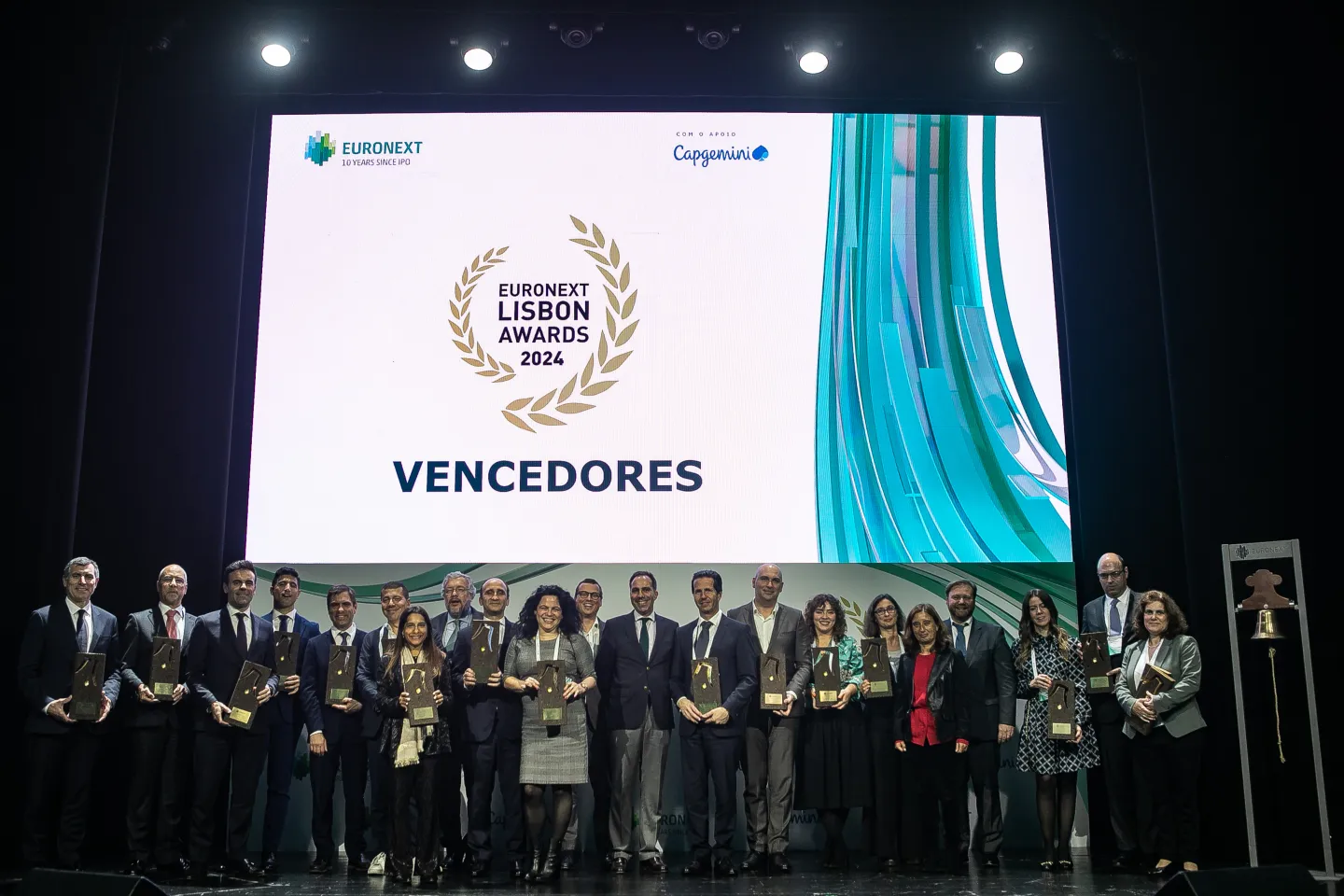
Vencedores dos Euronext Lisbon Awards 2024
Os prémios foram atribuídos durante o evento anual da Euronext, este ano com o apoio da Capgemini
Notas:
Breve descrição das categorias Euronext Lisbon Awards
Equity Champion | Destaca a empresa cotada com o maior retorno total, refletindo a evolução dos preços das ações e o pagamento de dividendos. São elegíveis as empresas cotadas nos mercados geridos pela Euronext Lisbon, incluindo as empresas estrangeiras. As empresas cujo turnover velocity seja inferior a 10%, bem como as que apresentem desempenho negativo, não são elegíveis. Este prémio é atribuído em duas categorias: Blue Chip e SME. Para efeitos de atribuição deste prémio, uma empresa é considerada Blue Chip se apresentar, no final do ano anterior,uma capitalização bolsista igual ou superior a €1.000 milhões de euros, e é considerada SME se apresentar uma capitalização bolsista inferior a esse montante.
Issuer of the Year | É distinguida a Entidade Emitente que realizou a operação com maior relevância e visibilidade no mercado de capitais português.
Market Member | É distinguido o membro com o maior valor (€) negociado na Euronext Lisbon, nos valores mobiliários identificados nesta categoria (Ações e Obrigações).
Structured Finance | É distinguido o membro que gerou maior crescimento dos valores mobiliários identificados em duas categorias: Derivados: e Warrants e Certificados.
Book Runner | O vencedor é o intermediário financeiro colocador com o maior número de emissões e montantes colocados nos valores mobiliários identificados nesta categoria, cotados na Euronext Lisbon. São elegíveis as ofertas iniciais e ofertas subsequentes. Em colocações sindicadas, apenas os intermediários financeiros líderes são selecionados.
Research House | O vencedor é escolhido em função do nível de cobertura das ações cotadas na Euronext Lisbon, examinando o número de empresas avaliadas e relatórios publicados por cada Research House no ano em análise, bem como a respetiva equipa dedicada e alocada para o efeito.
Law Firm | É selecionada a firma de advogados mais ativa, considerando os montantes e o número de emissões de ações e obrigações cotadas nos mercados geridos pela Euronext Lisbon em que estiveram envolvidas. Caso duas ou mais firmas estejam envolvidas na mesma emissão, ambas são consideradas.
Investment Fund Portugal | É reconhecido o fundo de investimento / fundo de pensões aberto que tenha realizado o maior esforço do investimento em ações cotadas nos segmentos da Euronext Lisbon, relativamente à sua carteira inicial de ações nacionais. Este prémio é desenvolvido em parceria com a APFIPP, que contribui para a definição dos critérios e dá o suporte técnico ao apuramento anual do vencedor.
Finance for the Future | Categoria aberta a todas as iniciativas, incluindo produtos, serviços, eventos ou outras, que se distingam pela inovação no mercado de capitais português. Esta categoria carece de submissão de candidatura.
Market Promotion Initiative | Distingue o evento de promoção do mercado de capitais português que revela maior impacto, avaliado, tanto quanto possível, por critérios objetivos, nomeadamente pelo número de participantes, meios envolvidos, e cobertura mediática. Esta categoria carece de submissão de candidatura.
Media Article | Distingue o melhor artigo publicado sobre mercado de capitais, avaliado por critérios de relevância, oportunidade, profundidade e rigor. Os candidatos têm de ser jornalistas com carteira profissional válida à data da publicação (que deverá estar anexa à candidatura). São admitidos os artigos publicados em qualquer formato (papel, online, vídeo) que tenham alguma referência ao mercado de capitais português, no período em análise no ano anterior. Esta categoria carece de submissão de candidatura.
Sustainable Finance | Distingue a iniciativa, projeto, evento, programa e/ou produtos relacionados que revele maior impacto positivo em matérias ambientais, sociais ou de governo da sociedade. Esta categoria carece de submissão de candidatura.
Settlement & Custody | É selecionado o Intermediário Financeiro que efetuou o maior número de emissões de ações e obrigações registados na Euronext Securities Porto (e não admitidas à negociação), ponderado pelos respetivos montantes.