
Back

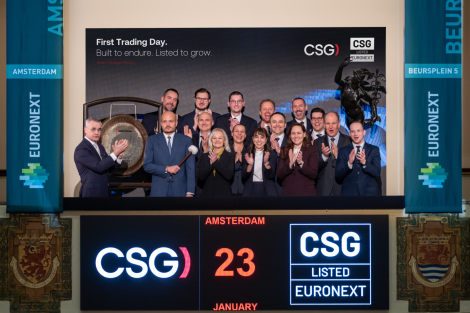
Catch up with the opening event of Euronext Sustainability Week 2024. 

The in-person conference, 'ESG investing and Sustainable Growth: moving forward' provides a useful opportunity to reflect on the latest and most recent challenges to sustainable growth in our countries.


Opening statement by Stéphane Boujnah, CEO of Euronext

In the opening event of Euronext Sustainability Week, representatives from listed companies, financial institutions, investment firms, and industry advisors debate the future challenges of sustainable growth investing. Discussions include new and emerging issues for Boards of Directors, growth opportunities generated by the transition to sustainable economies, carbon capture and storage technologies that are critical in the race to net-zero, and new frontiers in sustainable investing.

Videos from 'ESG investing and sustainable growth: moving forward':


The new frontier of ESG in the boardroom

Andrea Sironi, Chairman, Assicurazioni Generali 
Giovanni Gorno Tempini, Chairman, CDP 
Massimo Tononi, Chairman, Banco BPM 
Monica de Virgiliis, Chairwoman, Snam 
Moderator: Claudia Parzani, Chair, Borsa Italiana


Fireside chat

Francesco Starace, Chair, Science Based Targets Initiative 
Moderator: Fabrizio Testa, CEO and GM, Borsa Italiana


Empowering sustainable growth

Paolo Dellachà, CEO, De Nora 
Marco Arduini, CEO, EuroGroup Laminations 
Moderator: Fabrizio Testa, CEO and GM, Borsa Italiana


New technologies and solutions in the path to net-zero

Luca Dal Fabbro, Executive Chairman Iren and Deputy Vice President, Utilitalia 
Luigi Ciarrocchi, Director CCUS, Forestry & Agro‐Feedstock, ENI 
Moderator: Andrea Rumiz, Commercial Director Carbon Certificates, South Pole


Fireside chat

Andrea Illy, Chairman illycaffè and Co-Chair Regenerative Society Foundation
Moderator: Claudia Parzani, Chair, Borsa Italiana


ESG Investing and financing: moving forward

Sara Lovisolo, Head of ESG Development, Amundi Italy 
Paola Angeletti, Chief Sustainability Officer, Intesa Sanpaolo 
Rahul Ghosh, MD and Global Head of Sustainable Finance, Moody’s Ratings 
Fiona Melrose, Head of Group Strategy & ESG, UniCredit 
Dario Mangilli, Head of Sustainability, IMPact SGR 
Moderator: James Stacey, Global Leader, Clients & Industries, ERM


Key ESG trends from our issuers

Mathieu Caron, Global Head of Primary Markets, Euronext

Back

In an era where sustainability is no longer a choice but a necessity, the Euronext ESG Trends Report provides a comprehensive overview of the Environmental, Social, and Governance (ESG) performances among Euronext-listed companies. Released during Euronext Sustainability Week (full agenda), this annual report details the latest trends, regulatory impacts, and the advances companies are making towards a more sustainable future.

Download full report

Key highlights

  • Greenhouse Gas (GHG) Emissions: The report reveals a significant reduction in GHG emissions, with an average decrease of 14% in Scope 1 and 2 emissions over the past three years. Notably, mid-cap companies have been pivotal in this progress, showcasing a 29% reduction in their emissions.

  • Energy Management: Energy consumption patterns have evolved considerably, with large caps reducing their energy intensity by 26%. The share of renewable energy consumption and production has increased by 7 percentage points, reflecting a growing commitment to sustainable energy practices.

  • Diversity and Inclusion: There have also been improvements in diversity and inclusion, with a 2.1 percentage point increase in board gender diversity since 2021. Additionally, the number of women in management positions has seen a rise, highlighting ongoing efforts to foster gender equality in the workplace.

  • EU Taxonomy: The report underscores the rapid adoption of EU Taxonomy criteria, with 70% of large caps and 49% of mid-caps already aligning with the new reporting obligations. This demonstrates the critical role of regulations in integrating ESG key performance indicators (KPIs) into corporate reporting.

 The Euronext ESG Trends Report 2024 is an essential read for investors, policymakers, and stakeholders interested in the sustainability journey of Euronext-listed companies. It not only highlights the achievements and challenges, but also sets the stage for future improvements in ESG practices. By providing transparent and detailed data, Euronext empowers companies and investors to make informed decisions that drive sustainable growth.

About the database

The data presented in the Euronext ESG Trends Report 2024 is derived from Euronext’s extensive ESG database (My ESG Profile), which includes over 97,000 raw data points covering the years 2020 to 2023. The database focuses on more than 50 quantitative indicators per issuer, aligned with the Corporate Sustainability Reporting Directive (CSRD), Sustainable Finance Disclosure Regulation (SFDR), and the EU Taxonomy. The data exclusively comprises reported figures, ensuring accuracy and reliability, and covers 1,729 Euronext-listed companies. 
Back

We are thrilled to announce the release of our ESG Reporting Guide 2024, made available during the Euronext Sustainability Week. This comprehensive guide is an essential resource for companies looking to enhance their Environmental, Social, and Governance (ESG) practices, to remain in line with the latest EU regulations.

As sustainability continues to shape the future of business, this guide provides valuable insights into navigating complex ESG reporting requirements, including the Corporate Sustainability Reporting Directive (CSRD) and the EU Taxonomy. Whether you're a private company, SME, or large listed issuer, the ESG Reporting Guide offers tailored strategies to help you meet regulatory demands and strengthen your ESG performance.

Equip your business with the tools it needs to succeed in a sustainable world! Download your copy of the ESG Reporting Guide 2024 today and take the next step in your company's sustainability journey.

Download the ESG Reporting Guide 2024

Back

The index family setting a new benchmark for the European sovereign bond market.

Why invest in the Euronext MTS EGB Broad index family?

Leveraging MTS’ robust pricing data, sourced from MTS Cash trading platforms, the most reliable pricing sources for European Government Bonds, ensuring a level of transparency and replicability. MTS Cash prices undergo a stringent verification process, where bid and offer spreads are checked against maturity-specific thresholds for each country. Our partnership with MTS brings a level of precision and transparency that aligns with industry-leading benchmarks.

Top 10 Issuers of the Euronext MTS Fixed Income index family

  • Austria
  • Belgium
  • Finland
  • France
  • Germany
  • Ireland
  • Italy
  • the Netherlands
  • Portugal
  • Spain

What is the Euronext MTS EU Gross Return Index?

MTS is  a DMO-designated interdealer platform. In support of this role, Euronext and MTS have launched the Euronext MTS EU Gross Return Index as an additional benchmark offering price transparency and quality to market participants.

Read the Press Release


The Euronext MTS EGB Broad index family offers opportunities for a creating and listing a large range of investment vehicles such as ETFs, funds and structured products

More Euronext MTS EGB Broad Index:

 Euronext MTS EGB Index brochure

Euronext MTS EGB Broad Family Rulebook | Euronext MTS EU Family Rulebook

Visit MTS

 DISCOVER MORE EURONEXT INDICES

Euronext indices are used by financial institutions all around the world with more than 15,000 ETFs, funds and derivatives associated to our indices with billions of AUM.

Contact us at index-team@euronext.com for any queries.

Back to Indices  |  Euronext Index Data Page  |  Euronext Index Team Services

Back

Options strategies – long call
Benefits, risks and examples of a long call option

A long call option allows investors to benefit from price increases in an underlying asset with limited risk. This article explains the fundamentals of a long call option strategy, its benefits and risks, and how to implement it effectively.

What is a call option?

A call option is a financial contract that gives the holder the right, but not the obligation, to buy a specified quantity of an underlying asset at a predetermined price (the strike price) within a set period. Unlike buying stocks directly, where you pay the full price, a call option requires a smaller initial investment, known as the premium. The premium is paid to the seller (writer) of the call option.

In return the seller of the option has the obligation to deliver, upon the request of the buyer, a specified quantity of an underlying asset at a predetermined price (the strike price). This strategy is known as a short call option. 

Both buyers and sellers of call options can terminate either their right or obligation by a reverse (closing) transaction.

Understanding the long call option strategy

A long call option strategy involves purchasing call options with the expectation that the underlying asset's price will rise. This strategy is bullish, meaning it profits when the market goes up. The investor benefits from the potential upside of the stock while limiting their downside risk to the premium paid.

Key components of a long call option

  1. Premium
    The price paid for the option.
  2. Strike price
    The predetermined price at which the holder can buy the underlying asset.
  3. Expiry date
    The date by which the option must be exercised or will expire worthless.

Advantages of the long call option strategy

  1. Leverage
    Call options provide leverage, allowing investors to control a larger position with a smaller capital outlay compared to buying the stock outright.
  2. Limited risk
    The maximum loss is limited to the premium paid, making it a defined-risk strategy.
  3. Flexibility
    Investors can choose different strike prices and expiry dates to tailor the strategy to their market outlook and risk tolerance.
  4. Profit potential
    Significant profits can be realised if the underlying asset appreciates substantially, offering high reward potential for a relatively low initial investment.

Risks of the long call option strategy

  1. Time decay
    Options are wasting assets, meaning their value erodes over time, especially as the expiry date approaches. This time decay can work against the investor if the expected price movement does not occur quickly enough.
  2. Volatility
    While options can benefit from increased volatility, unexpected decreases in volatility can reduce the option's value.
  3. Out-of-the-money risk
    If the underlying asset does not rise above the strike price by expiry, the option will expire worthless, resulting in a total loss of the premium paid.

Example of a long call option

Imagine you believe Company XYZ's stock, currently trading at €50, will increase significantly over the next three months. You decide to purchase a call option with a strike price of €55 expiring in three months, costing €2 per share (options typically represent 100 shares, so the total cost would be €200).

Option strategies - Long call
  

Profit and loss potential of a long call

  • Breakeven point
    The stock price at expiry must exceed the strike price plus the premium paid for the investor to break even. In this example, the breakeven price would be €57 (€55 strike price + €2 premium).
  • Unlimited upside potential
    If the stock price rises above the breakeven point, the profit potential is theoretically unlimited. For example, if XYZ's stock rises to €70, the profit would be (€70 – €55 – €2) x 100 = €1,300.
  • Limited downside risk
    The maximum loss is limited to the premium paid. In this case, the most the investor can lose is €200 if the stock remains below €55 by the expiry date. 

Implementing the long call option strategy

  1. Market analysis
    Conduct thorough research and analysis to identify potential stocks or assets expected to increase in value.
  2. Select the strike price and expiry date
    Choose a strike price that reflects your market outlook and an expiry date that allows enough time for the expected price movement to occur.
  3. Monitor the position
    Regularly review the position and market conditions. Be prepared to adjust the strategy if the underlying asset's price movement or volatility changes significantly.
  4. Exiting the position
    Decide in advance your profit targets and loss limits. Consider exiting the position if the stock reaches your target price or if it becomes clear that the expected price movement will not occur within the desired timeframe.

Long call vs. other strategies

A long call option strategy is often compared with other strategies like buying stocks outright, a short put option, or other options strategies like spreads anticipating a market increase.

Versus buying stocks

A long call requires less capital than buying the same amount of stock, offering leverage with limited downside risk. Buying stocks could increase risk potential to such a level that the stocks become worthless. On the other hand, buying stocks does not impose a time limit on the possibility to benefit from your predicted market increase. 

Versus a short put option

A short put creates the obligation to buy, upon the request of the buyer of the put option, a specified quantity of an underlying asset at a predetermined price (the strike price). The seller receives a premium as compensation for this obligation. The option loses its value if the price of the underlying goes up. However, the profit for the seller is restricted to the premium received. A short put also requires the buyer to buy the shares at the agreed price, even if the value decreases, or to close out the position against a loss.  

Versus spreads

While more complex strategies like bull call spreads involve buying and selling call options at different strike prices, a long call is simpler and offers unlimited upside potential but requires a precise market movement.

Practical tips to increase the possibility for success

  • Start small
    If you're new to options trading, start with a small position to understand how the market works and gain experience without taking on significant risk.
  • Use technical analysis
    Technical indicators and chart patterns can help identify potential entry and exit points for the strategy.
  • Stay informed
    Keep up with market news, earnings reports, and other factors that can influence the price of the underlying asset.
  • Risk management
    Always be aware of your risk tolerance and never invest more than you can afford to lose.
  • Diversify
    Don't put all your capital into one position. Diversifying your investments can help spread risk and increase the chances of overall success.

The long call option strategy is a powerful tool for investors looking to capitalise on anticipated price increases in an underlying asset while limiting their downside risk. By understanding the key components, advantages, and risks, and by implementing the strategy with careful market analysis and risk management, investors can potentially achieve significant profits. As with any investment strategy, thorough research and prudent decision-making are essential for success in options trading.

Investing in the financial markets requires a deep understanding of various strategies to maximise returns while managing risk. Please consult your bank or broker for advice or read the Key Information Document for the product you are considering investing in to get a better understanding of all risks and costs involved.

See also:


Back

In the world of stock trading, latency – the delay between a trader’s action and the execution of that action – is a critical factor. High-frequency trading firms (HFTs), in particular, strive to minimise latency to gain a competitive edge. One technology that has dramatically reduced latency in stock exchange order transmission is the wireless microwave network.

How wireless microwave networks reduce latency

  1. Direct line-of-sight transmission:
    Microwave networks transmit data through the air via high-frequency radio waves, requiring a direct line of sight between transmission points. Traditional fibre optic cables, on the other hand, often take longer, indirect routes to navigate around obstacles. The straight-line path used by microwave networks significantly reduces the physical distance data must travel, thereby decreasing transmission time.
  2. Speed of signal:
    Microwave signals move through the air, which has a lower refractive index compared to the one of the glass where the light signals propagate in optic fibres. This means microwave signals encounter less resistance, maintaining higher speeds and reducing latency.
  3. Optimised routing:
    Microwave networks are meticulously engineered to provide the shortest possible routes between key trading locations. By minimising the distance data must travel, these networks can significantly cut down on transmission time. This optimised routing is particularly beneficial for HFT firms, which require the fastest possible data transfer to execute trades more efficiently.

The impact of reduced latency

  1. Competitive advantage in trading:
    For HFT firms, milliseconds matter. Reduced latency allows these firms to react to market changes faster than competitors, enabling them to capitalise on short-lived arbitrage opportunities. This speed advantage makes having the lowest latency a crucial component of their trading strategies.
  2. Market efficiency:
    Faster data transmission and order execution contribute to more efficient markets. When traders can execute orders quickly, it leads to more accurate and timely pricing of securities, benefiting all market participants. This efficiency helps narrow bid-ask spreads and enhances overall market liquidity.
  3. Risk management:
    In volatile markets, the ability to execute orders swiftly can mitigate risk. Reduced latency allows traders to respond more quickly to market movements, adjusting their positions to manage risk more effectively. This capacity for rapid response is particularly important during periods of high volatility or market stress.

Wireless microwave networks have revolutionised the transmission of stock exchange orders by significantly reducing latency. Through direct line-of-sight transmission, faster signal propagation and optimised routing, microwave networks provide a critical advantage in the high-speed world of financial trading. 

As technology continues to advance, these networks are likely to play an even more pivotal role in the financial markets, driving further innovations and efficiencies.

See how the Euronext Wireless Network (EWiN) harnesses microwave technology

Back

Moneyness is the relationship between the strike price and the market price of the underlying asset during the lifetime of an option. Learn about the difference between ‘at the money’, ‘in the money’, and ‘out of the money’ and what each term means. 

Moneyness explained in detail

At-the-money

An option is referred to as “at-the-money” when its strike price is equal to the (future) price of the underlying value (future = spot price + interest over the life time – dividends paid during the life time).

In-the-money

A call option is referred to as “in-the-money” when its strike price is below the (future) price of the underlying value. A put option is referred to as “in-the-money” when its strike price is above the (future) price of the underlying value.

Out-of-the-money

A call option is referred to as “out-of-the-money” when its strike price is above the (future) price of the underlying value. A put option is referred to as “out-of-the-money” when its strike price is below the (future) price of the underlying value.

Moneyness, call vs put

When a call option is in-the-money, then a put option of the same series is out-of-the-money, and vice versa.

Option valuation based on intrinsic value, volatility and moneyness

The option premium consists of two components, intrinsic value and time value. The time value is highly dependent on the time-to-maturity, the price volatility of the underlying asset and on the moneyness of the option series. Generally, the higher the price volatility, the higher the time value. Also, the longer the time-to-maturity, the higher the time value. When comparing options with an identical underlying value and time-to-maturity, at-the-money options have the highest time value.