-
Listing
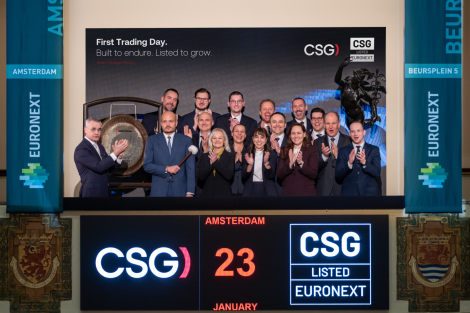 Strengthening Europe’s strategic autonomy through capital marketsCzechoslovak Group lists on EuronextRead more
World’s largest defence IPO ever recorded.
Learn more about Euronext’s initiatives to enhance financing and visibility for European aerospace and defence companies -
Trading
 Where European Government Bonds meet the futureFixed Income derivativesRead more
Trade Mini Bond Futures on main European Government Bonds
-
Clearing
 Step into Europe’s next phase of Repo ClearingRepo ClearingRead more
Euronext is expanding its repo clearing services to boost market access, liquidity provision and collateral optimisation across Europe.
-
CSD
 European CSD modelBuilding the CSD of Choice in EuropeRead more
Euronext Securities is shaping the future of European capital markets by enhancing integration, connectivity, and innovation.
-
Technology
 Euronext Technology SolutionsHigh-Frequency Trading Solution (HFTS)Read more
The new generation of high-frequency risk trading platforms, offering the highest performance with ultra-low latency and minimal jitter, all at a low total cost of ownership.
-
Data
-
Indices
 Access the white paperInvesting in the future of Europe with innovative indicesRead more
The first edition of the Euronext Index Outlook series with a particular focus on the European Strategic Autonomy Index.
-
About Euronext
 Euronext strategic planInnovate for Growth 2027Read more
Shaping capital markets for future generations

Prelude lists on Euronext
ETS lists on Euronext
Investor Relations Fundamentals
Investor Relations Fundamentals
18/03/2026 - 26/03/2026
Investor Relations Fundamentals
- Course
- Norway
Euronext joins the CAC 40®: A milestone in a decade of transformation
As of 22 September 2025, Euronext has officially joined the CAC 40®, France’s flagship blue-chip index. This inclusion marks a defining moment in Euronext’s evolution from a national exchange group to a diversified, integrated European leader.
Euronext’s entry into the CAC 40® follows more than a decade of strategic growth since its IPO in 2014. Over this period, the Group has deeply transformed its business model, expanded its geographic presence and successfully built a full-service offering across the entire capital markets value chain.
This milestone highlights the success of Euronext’s ambitious transformation
Having begun the decade as a cash equities-focused operator of four national exchanges, Euronext now serves as the backbone of European capital markets, operating seven regulated exchanges across Amsterdam, Brussels, Dublin, Lisbon, Milan, Oslo and Paris, with an upcoming offer for the Athens Stock Exchange.
Euronext’s diversification has been equally significant and reflects our leadership in shaping European capital markets. The Group has scaled beyond trading to encompass listing, clearing, settlement, custody and corporate solutions, while also establishing leadership in ESG indexing and data services. Its proprietary trading platform Optiq® and the creation of Europe’s largest liquidity pool further underscore its technological leadership and operational excellence.
With over €1.6 billion in revenue in 2024 and an adjusted EBITDA exceeding €1 billion, Euronext has consistently demonstrated strong financial performance, supported by a resilient diversified business model. The Group’s European federal model and long-term commitment to integration have positioned it as a pillar of Europe’s financial infrastructure, capable of rivalling global peers while reinforcing Europe’s strategic financial autonomy.
This performance is the result of a clear strategic vision as outlined in the Group’s most recent strategic plan, ‘Innovate for Growth 2027’, resulting in a tenfold increase in market capitalisation from €1.4 billion at IPO in June 2014 to €14.5 billion as of August 2025.
This milestone is a reflection of the collaboration, trust and commitment of all our stakeholders into building successful, integrated European projects
To mark this milestone, Euronext hosted a bell ceremony yesterday in Paris, celebrating its official entry into the CAC 40® Index. The event brought together key figures from across Europe’s capital markets, including institutional investors, regulators, listed companies, partners and policymakers, such as Éric Lombard, French Minister of Economy and Finance.
Euronext’s inclusion in the CAC 40® is a collective achievement, made possible by the dedication of its teams and the continued trust of clients, partners, shareholders and supervisors across Europe. As the Group enters this new chapter, it does so with renewed commitment to innovation, scale and long-term value creation for the European economy.
Download the Euronext CAC 40® introduction brochure for more information.
Listen to the full statement from Stéphane Boujnah, Euronext CEO and Chairman of the Managing Board, on Euronext's inclusion in the CAC 40® below.
Emirates Islamic lists world-first sustainability-linked Sukuk on Euronext Dublin
Emirates Islamic has successfully priced and listed the world’s first sustainability-linked financing Sukuk bond on Euronext Dublin, marking a major step in sustainable Shariah-compliant finance.
On 23 September 2025, Emirates Islamic placed a USD 500 million Sukuk with a five-year maturity. The issuance attracted strong investor interest, generating USD 1.2 billion in orders and with an oversubscription of 2.4 times. Participation was diversified across regions: 83% from the Middle East, 10% from Europe, and 5% from Asia, reflecting investor confidence in this innovative approach to sustainable finance.
The proceeds will support corporate projects linked to sustainability targets, aligned with Emirates Islamic’s Sustainability-Linked Financing Sukuk Framework, which has received a second- party opinion from ISS-Corporate confirming its alignment with international best practice. This issuance highlights Emirates Islamic’s role as a pioneer in combining Shariah-compliant finance with measurable sustainability objectives, advancing the UAE’s broader sustainability ambitions, including the Net Zero 2050 goal.
This landmark Sukuk establishes a global benchmark for sustainability-linked Sukuk. By integrating sustainability performance targets within a Shariah-compliant structure, Emirates Islamic demonstrates how capital markets can drive innovation and channel investment towards sustainable development worldwide.
Want to learn more about Sukuk listing?
Visit our bond listing webpage and get in touch with the Euronext team.
25 years of Euronext: Celebrating a quarter-century of shaping capital markets
September 2025 marks 25 years since the creation of Euronext. What began in 2000 as a consolidation of three historic markets – Amsterdam, Brussels and Paris – has since evolved into the leading European capital markets infrastructure, operating across the full trading value chain and seven regulated markets.
Over the last quarter-century, Euronext has grown significantly in scale and influence, playing a central role in shaping Europe’s financial architecture. From its first IPO in 2001 to its standalone IPO in 2014, the Group’s ability to adapt, expand and lead has been a constant driver of success. Today, Euronext operates within a federal model that is fully aligned with the ambition of building a harmonised and globally competitive European capital market.
A transformational journey from 2000 to 2025
Euronext’s 25-year journey has been marked by continuous strategic expansion geographically, operationally and technologically. Since 2000, the Group has carried out an ambitious series of acquisitions to broaden its footprint and service offering, including:
-
7 exchanges: Amsterdam, Brussels, Dublin, Lisbon, Milan, Oslo and Paris
-
4 CSDs: Copenhagen, Oslo, Milan and Porto
-
1 European clearing house: Euronext Clearing
-
Diversification into new asset classes: FX trading, power trading, fixed income trading
-
Growth from 760 employees in 2014 to over 2,500 in 2025, spanning 66 nationalities and 21 countries
This expansion has allowed Euronext to offer clients a harmonised experience across the entire market cycle, from listing and trading to clearing, settlement and custody, while preserving local market expertise.
A market leader in listing and trading
Over the past 25 years, Euronext has become the largest listing venue in Europe, with 1,900 issuers and an aggregated market capitalisation of €6.3 trillion, up from €2.4 trillion in 2000. Over 400 new companies have listed in just the past three years, including 200 tech firms and 80 international issuers, solidifying Euronext’s role as the bridge between global capital and European markets.
On the trading side, Euronext now handles 25% of European equities trading. The Group operates Europe’s largest liquidity pool and has developed its proprietary trading platform Optiq® . Average daily equity trading value has surged from €6.5 billion in 2014 to €10.4 billion in 2024.
With its global benchmark commodities franchise MATIF, leading position in bond and ETF trading as well as the expansion of the MTS bond markets and Nord Pool power markets, Euronext is shaping the future of multi-asset trading in Europe.
Expansion across the full value chain
Euronext is driving change in Europe’s post-trade industry, and its post-trade offerings have grown in parallel with its trading and listing businesses to serve clients along the whole of the trading value chain.
Clearing across the Euronext markets is now provided by Euronext Clearing, with the development of a European repo clearing offering well underway.
With Euronext Securities, the Group now operates the third-largest CSD network in Europe, with around €7 trillion in assets under custody.
Further integration and harmonisation plans aim to bridge Europe’s fragmented post-trade landscape. These include the consolidation of settlement through Euronext Securities for Euronext markets in Amsterdam, Brussels and Paris, the development of one trusted platform for settlement, custody, issuance and value-added services, including tax and data solutions.
Committed to sustainability and innovation
Euronext is actively advancing the sustainable finance transition. The Group aims to achieve carbon neutrality by 2050 at the latest, and to set science-based net-zero targets by 2027. With over 500 ESG indices, 3,100 ESG bonds and 1,300 ESG-related ETFs, Euronext is a leading ESG index provider in Europe.
Innovation remains paramount to our growth strategy. As outlined in the Group’s strategic plan, ‘Innovate for Growth 2027’, Euronext capitalises on its in-house technology along with AI to meet evolving client needs, scale its SaaS offerings and further strengthen its role as a European market leader.
Collaboration at its core
At the heart of Euronext’s success is its people. Employees across Europe and beyond have contributed to the Group’s growth through their expertise, collaboration and shared commitment to building integrated and efficient markets. Euronext’s dedication to diversity and inclusion is now a key pillar of its innovation and long-term growth.
From scaling Europe to entering the CAC 40®
This 25-year milestone serves as a point of reflection on Euronext’s achievements and a moment to reaffirm its future ambitions. In September 2025, this journey reached a new peak with Euronext’s inclusion in the CAC 40®, France’s benchmark blue-chip index. This recognition reflects the Group’s scale, leadership and the trust of investors and stakeholders across Europe.
As Euronext continues to support companies, investors and policymakers, it does so with a renewed ambition to serve as the most efficient path to shaping resilient, sustainable and competitive European capital markets for future generations.
Download the CAC 40® introduction brochure for more information about this remarkable next chapter in the 25-year story of Euronext.
Euronext launches an innovative suite of fixed income derivatives on main European government bonds
Unlocking the power of data: Euronext Securities’ data services
Who are you and what is your role at Euronext Securities?
My name is Vilde Eiesland, and I am Head of Data Sales at Euronext Securities. I lead a dedicated team of data specialists based across Porto, Norway, Italy and Denmark. Since joining in early 2023, my focus has been on expanding our data business and deepening our understanding of how data can deliver value for our clients. Today, our team covers all Euronext Securities’ Central Securities Depository (CSD) markets, working closely with clients to support their evolving needs.
What are the key data trends within the CSD industry and why is this topic strategic for market participants?
The demand for high-quality, timely data is growing rapidly across the financial sector. Market participants are increasingly seeking data to drive automation, optimise processes and support advanced analytics, including artificial intelligence. This trend is not only global but also accelerating within the CSD industry, where accurate post-trade data is essential for operational efficiency, regulatory compliance and strategic decision-making.
Clients are asking for more granular and flexible access to data - from settlement efficiency metrics and corporate actions to reference data and predictive insights. The increase in data usage reflects a broader shift towards digitalisation and smarter, data-driven operations.
What is Euronext Securities’ data value proposition and what products do you offer?
Euronext Securities is uniquely positioned as a natural source of post-trade data, being directly involved in every step of the transaction chain. Our data services are built on three core principles: accuracy, reliability and flexibility.
We offer a wide range of secured data sets sourced directly from the CSD, enabling clients to choose either broad packages or tailored subsets to meet their specific requirements. Whether clients are looking for comprehensive market coverage or targeted data points, our solutions are designed to be both cost-efficient and relevant.
We have reached several key milestones, including expanding our client base and enhancing our product portfolio across all four markets we serve. This progress is fully aligned with Euronext group’s strong ambitions on data, as set out in our strategic plan for 2025-2027. By strengthening our core systems and working closely with Euronext Data Solutions, we are extending our reach beyond our four core markets. Notably, Euronext Data Solutions will soon launch a data catalogue that will bring together the entire data portfolio from Euronext group, making it even easier for clients to discover and access the data they need.
What can clients expect from Euronext Securities’ data services in the future?
As data becomes an ever more critical asset, Euronext Securities focus remains on giving clients direct access to accurate, reliable data - enabling them to trust both the origin and integrity of the information they receive.
Looking to the future, we will continue to develop new data sets and enhance our services in response to client needs and market developments. Our position as a trusted source of post-trade data, combined with our expanding collaboration with Euronext Data Solutions, ensures that we are uniquely placed to support our clients’ data strategies across Europe and beyond.
If you would like to learn more about our data services or explore a sample of our data sets, please do not hesitate to contact our team. We are always happy to discuss how we can support your data strategy with tailored solutions built on trusted, source-based post-trade information.
Contact us if you would like to learn more about our Data Services at ES.datasales@euronext.com
Euronext Sustainability Week 2025 recap: Capital markets for a resilient and sustainable future
The week of 4-11 September marked the successful return of Euronext Sustainability Week, our flagship annual initiative that brings together Europe’s sustainable finance ecosystem for a full week of insight, discussion and collaboration.
Held across ten Euronext locations as well as virtually, this year’s edition continued to position Euronext at the forefront of shaping capital markets that are sustainable, resilient and competitive.
Launched in 2017 and expanded in 2023 to include all Euronext locations across Europe, Euronext Sustainability Week has grown into a key platform for sharing best practices, driving innovation and promoting dialogue on sustainable finance.
Responding to change while enabling progress
With recent shifts in regulation, economic volatility and global uncertainty, the need for informed, transparent and future-ready sustainable finance has never been more urgent. Euronext Sustainability Week 2025 responded to this urgency with a dynamic programme of in-person and virtual events designed to foster alignment, enhance ESG practices and support capital markets in addressing Europe’s long-term challenges.
Over the course of the week, we gathered a diverse set of stakeholders, including listed companies, institutional investors, financial institutions, regulators and ESG experts to explore the role of capital markets in driving the transition to a sustainable economy.
Events this year addressed a broad range of timely topics. These included the evolving dynamics of ESG regulation and reporting, with a focus on CSRD implementation and the expectations of investors around transparency and materiality. Several sessions examined the capital markets outlook for renewable energy and green infrastructure, while others tackled the evolution of ESG bond markets, sustainable corporate governance and the strategic role of stewardship in assessing long-term risks and opportunities.
In addition, stakeholders engaged in discussions on sustainability-linked investment strategies, the impact of climate benchmarks and how SMEs and supply chain actors can contribute to the broader sustainability agenda. Workshops and conferences provided space for practical learning and in-depth dialogue on how capital markets can best support Europe’s climate goals and economic resilience.
Insights from across Europe
Throughout the week, 10 Euronext locations hosted a series of 34 events showcasing the depth and diversity of Europe’s sustainable finance initiatives, gathering over 3,200 participants, 200+ investors and 180+ speakers. In Milan, Palazzo Mezzanotte welcomed stakeholders for a full day of debate on “Driving growth and competitiveness through sustainability”, exploring how innovation and regulatory clarity can help boost both resilience and performance. Afternoon seminars included “Navigating the path of mitigation, resilience and growth” and “The evolution of ESG bond markets: embracing standards and innovation”.
Also in Milan, the Physical Investor Conference on Infrastructure, Energy and Defence brought together 21 listed companies, 5 ESG bond issuers, 90+ institutional investors and 25+ analysts for over 450 meetings, supported by Bank of America, EQUITA, Intermonte and Intesa Sanpaolo. The workshop “Energy mix, networks and infrastructure” featured leading voices from across the Italian infrastructure sector including Fabrizio Testa, Luca Matrone, Renato Mazzoncini and others who discussed the future of infrastructure as a driver of sustainable growth.
In Paris, the session “The investor lens: strategy, stewardship and the future” co-hosted with Norges Bank Investment Management explored how investors are shaping the ESG agenda through engagement and long-term value creation. In Amsterdam, chief sustainability officers gathered for a closed-door roundtable, “Navigating ESG in a complex global landscape”, to share cross-border insights and align on common ESG challenges.
In Lisbon, the conference “Sustainability, return & risk” brought together Isabel Ucha, CEO of Euronext Lisbon, Assunção Cristas, partner-lawyer in the Environment & Climate practicer, professor and politician, and a panel of market experts to explore how to translate sustainability strategies and metrics into actionable financial insights that align with investor priorities. The event was organised in partnership with BCSD, a non-profit association uniting leading Portuguese companies to advance sustainability and promote corporate responsibility across multiple sectors as the national chapter of the World Business Council for Sustainable Development (WBCSD).
A highlight virtual session, “The ethical and sustainable use of AI”, led by AI Act consultant Dr Nathalie Devillier, addressed the implications of the European AI Act, the importance of ethical data practices, and how managing algorithmic bias can enhance inclusion and support ESG objectives in the digital age.
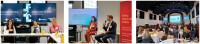
ESG in a changing world
One of our key events took place in Brussels with the session “The new ESG paradigm: Energy, Security and Geostrategy in a changing world,” led by Stéphane Boujnah, CEO and Chairman of Euronext. The event emphasised integrating traditional ESG principles with energy resilience and strategic autonomy, crucial for Europe’s sustainable future. Speakers including Belgium’s Minister of Defence Theo Francken and NATO’s Admiral Pierre Vandier highlighted the need to align investments with Europe’s energy, security and geostrategy initiatives. The session featured the launch of the ELITE-supported European Aerospace and Defence Growth Hub, connecting SMEs with industry leaders like Leonardo and Fincantieri, alongside new financing tools such as the European Defence Bond Label and IPOready Defence programme to foster innovation and resilience in critical sectors.
Experts including Eric Beranger (MBDA), Thea Utoft Høj Jensen (Insurance Europe), Philippe Zaouati (Mirova) and Thierry Francou (Eurenco) called for regulatory clarity, collaboration and deeper ESG dialogue in defence and security. A fireside chat with Robert de Groot, Vice-President of the European Investment Bank, highlighted the €100 billion investment needed (€30 billion in energy projects) to support Europe’s infrastructure and innovation. Meanwhile, leaders like Gregoire Dallemagne (Luminus) and Guntram Wolff (Université libre de Bruxelles) stressed the importance of diverse energy sources, private capital and homegrown technologies for achieving energy sovereignty.
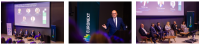
Announcing strategic initiatives in sustainable finance and governance
Euronext Sustainability Week 2025 was also a platform for announcing key developments reinforcing our commitment to sustainability, transparency and innovation across European markets. Highlights included the launch of Euronext Sustainability Network, with founding partners such as PwC, ING, ERM, Mood’s Ratings, South Pole and others; the new Euronext Foundation initiatives promoting diversity and financial literacy through a scholarship programme with INSEAD and the launch of the Euronext Trading Game; as well as the launch of a sustainability education partnership with AXA Climate School for Euronext employees. In support of listed companies and investors, enhancements to My ESG Profile and the launch My ESG Benchmark will increase access to meaningful sustainability data and performance comparisons. We also released an updated ESG Reporting Guide, the ESG Trends Report 2025, and introduced MTS Greenium, a new tool providing real-time insights into green bond pricing. Innovations from Nord Pool and expansions in Euronext Corporate Solutions further highlight how Euronext is enabling Europe’s transition to a more transparent, resilient and sustainable financial system.
More information about these announcements is available in our press release.

Shaping capital markets for a sustainable future
Euronext Sustainability Week reflects our broader commitment to embedding ESG into the fabric of the capital markets by educating stakeholders, facilitating sustainable finance solutions and leading by example.
As the leading market infrastructure in Europe, Euronext continues to play a defining role in building a sustainable financial ecosystem for the future. From helping companies align with ESG standards to providing innovative instruments for responsible investment, we remain committed to shaping capital markets that serve both present needs and future generations.
Thank you to all participants, partners and contributors who made Euronext Sustainability Week 2025 a success. Together, we are reinforcing the role of capital markets as a catalyst for sustainable growth and strategic resilience in Europe.
Visit our website to learn more about Euronext’s ESG commitment.
Making Europe relevant again - hear it from our experts!
Euronext Securities leads the call for integrated market infrastructure at Posttrade360 Stockholm
Pierre Davoust, Head of Euronext Securities, delivered a compelling message on the future of European capital markets infrastructure, making it clear that Euronext is not only challenging the status quo but is also delivering tangible benefits for clients and the wider market today. At the conference, Euronext Securities took a leading role, participating in 10 panels and underlining its commitment to shaping the future of post-trade services in Europe.
Speaking in one of the headline panels, Davoust emphasised that the ultimate objective is not simply consolidation, but ensuring that capital markets serve the economy and society by driving growth and relevance for Europe on the global stage. He urged industry leaders to focus on the bigger picture, making Europe more relevant again by fostering stronger European growth through integrated capital markets infrastructure. Unlike competitors who defend the status quo, Euronext is taking decisive action to move beyond fragmented domestic systems, leveraging platforms such as T2S to create a competitive and unified market that benefits all participants. It also provides genuine choice where none exists today.
Pierre Davoust said:
With our announcement earlier this year, clients are able to manage four central European markets - France, the Netherlands, Belgium and Italy - in one CSD by September 2026. With this, we are taking concrete action to enable market participants to move away from a fragmented domestic structure to a fully European one. Thanks to T2S, competition can happen for real, creating a truly integrated market for CSD activities in Europe, with less cost, less complexity and more choice.
Davoust went on to underline that it is the post-trade community itself that has the power to drive change:
You have the power to make the change happen, by making the right choice between maintaining the status quo and moving towards an integrated infrastructure that will reduce friction costs on equity investments in Europe. This will ultimately strengthen Europe’s position globally and support the growth of our continent.
Other panellists included Haroun Boucheta (BNP Paribas), Isabelle Delorme (Euroclear), Julien Jardelot (Lseg), Jens Quiram (Eurex) and John Siena (Brown Brothers Harriman).
Zooming in on Europe’s CSD industry – what’s on the horizon for 2026
Niels Hjort Rotendahl, CEO of Euronext Securities Copenhagen, joined a panel examining the evolving landscape of central securities depositories in Europe. He provided an update on the bid for the Athex Group, highlighting the strategic rationale behind Euronext’s approach as a true European consolidator of financial market infrastructures. Rotendahl emphasised the benefits of geographic diversification for Euronext and the potential synergies of integrating the Athex Group onto Euronext’s trading platform Optiq® and the new CSD platform currently in development, as well as integrating their clearing business. He also noted the positive developments in Greece, where unemployment rates are falling, asset values are rising and GDP growth exceeds the European Union average.
Crucially, Euronext is not waiting for long-term visions to materialise. The company is already delivering practical solutions that enable market participants to benefit from interoperability, efficiency and choice. The panel discussed the importance of T2S as the settlement engine for Europe, with Rotendahl advocating for its mandatory use to drive efficiency and interoperability across markets. He addressed the complexities of market entry, such as passporting, and stressed that a fully interoperable European market would make such processes more rational and commercially viable.
Niels Hjort Rotendahl said:
We see ourselves as a true European consolidator of financial market infrastructures. With geographic diversification and synergies across our trading and CSD platforms, we are building the foundations for a fully interoperable and highly efficient European market. T2S is the settlement engine of Europe, and we need to push even further to make its use mandatory.
Other participants included Anna Kulik (ECSDA), Jennifer Robertson (European Commission), Philip Brown (Clearstream Banking), Jan Lemeire (Euroclear Sweden and Euroclear Finland) and Maciej Trybuchowski (KDPW).
T2S in Norway – or not?
Although a more niche topic at the event, the panel on the outlook for T2S in Norway attracted a full audience. Kristine Bastøe, CEO of Euronext Securities Oslo, participated in a discussion on Norway’s potential transition to the T2S settlement platform. With Norges Bank currently evaluating T2 and T2S and Euronext Securities actively contributing to the T2S consultation process, Bastøe emphasised that the company has mobilized the community operating in the Norwegian market to ensure that all perspectives are considered. The market is united in need for a swift decision on T2S, once the direction for T2 has been determined.
The panel highlighted that Norway’s current settlement system, though modernised, will eventually stand out with Denmark joining T2S in 2018, Finland joining in 2023, and Sweden committed to the transition to T2 with T2S to follow. Consensus among participants was that T2S offers significant benefits, including increased harmonisation with European settlement processes that will help maintain Norway’s attractiveness to foreign investors, who currently hold 40% of the market value on Euronext Oslo Børs. However, concerns remain regarding implementation costs and the potential impact on the number of settlement participants in Norway.
Bastøe stressed that Euronext Securities will adapt to any decision made by Norges Bank, but noted that alignment with T2S would enhance integration and support Norway’s continued relevance in European capital markets.
Kristine Bastøe said:
We see ourselves as a true European consolidator of financial market infrastructures. With geographic diversification and synergies across our trading and CSD platforms, we are building the foundations for a fully interoperable and highly efficient European market. T2S is the settlement engine of Europe, and we need to push even further to make its use mandatory.
We want to move in the same direction as other European countries, ensuring Norway remains attractive and relevant for investors and issuers. However, regardless of the central bank’s decision, Euronext Securities will adapt to support the market.
Euronext Securities: Thought leadership across the conference
In addition to these three panels, Euronext Securities’ experts contributed to eight further sessions, reinforcing the company’s position as a thought leader in European post-trade services. Alessio Mottola, CEO of Euronext Securities Milan, participated in a panel on T+1 impacts on settlement and fail management. Chiara Rosetti, Senior Manager of Regulatory and Government Affairs at Euronext Securities, contributed to the panel on T+1 impacts on clearing. Janina Marks, Head of Sales and Business Development – Derivatives & Clearing at Euronext, joined a lively discussion on the promise and practicalities of today’s repo activity.
The breadth and depth of participation reflect Euronext’s commitment to driving innovation and collaboration across the industry. Euronext is delivering choice and efficiency where previously there was none, and is determined to meet the needs of clients and the market with practical solutions, not just promises.
Interested in learning more or joining the conversation? Contact Euronext Securities for further insights and opportunities to engage.