




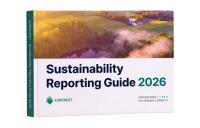
Euronext is pleased to launch the Sustainability Reporting Guide 2026, released as part of Euronext Sustainability Week 2026. This new edition provides guidance to help companies respond to the latest developments around sustainability reporting.
In 2026, companies are expected to demonstrate how environmental, social and governance considerations are embedded within their strategy, governance and capital allocation. In 2026, geopolitical uncertainty as well as Europe’s focus on strategic autonomy are changing the context in which companies operate. Clear sustainability reporting can help businesses build trust and become more resilient.
Designed for private companies, listed SMEs and large issuers, the guide offers practical recommendations for integrating ESG considerations into corporate strategy and helps companies understand where they stand and what may be expected of them.
What’s new in 2026?
In 2026, Europe’s sustainability reporting framework continues to evolve. The Omnibus reforms aim to make reporting more proportionate and less burdensome for companies.
Under the revised CSRD, mandatory reporting now focuses on companies with at least 1,000 employees and €450 million in net turnover. This is expected to reduce the number of companies in scope by around 80%, with listed SMEs no longer subject to mandatory reporting. The European Commission estimates that the wider simplification package could save European companies up to €40 billion. However, companies that remain in scope still face high expectations around the quality and reliability of their sustainability information.
The ESRS and EU Taxonomy requirements are also being streamlined. The aim is to reduce the number of data points companies need to report and allow them to focus on the information that is most relevant to their activities.
Despite the simplified framework, the need for clear and reliable sustainability information remains important to investors and business partners.
Key highlights
The guide also offers insights into emerging trends, including:
- EU Taxonomy reporting, including simplified templates and new exemptions for activities that are not financially material.
- SFDR 2.0, which proposes simpler disclosure requirements and new categories for sustainable investment products.
- The ESG Ratings Regulation, which aims to make ESG ratings more transparent, reliable and comparable.
- The VSME Standard, a voluntary and proportionate reporting framework for micro, small and medium-sized companies.
- The European Single Access Point, which will provide centralised and machine-readable access to financial and sustainability information.
- Climate transition plans and biodiversity reporting, including the requirements and guidance provided by ESRS E1, ESRS E4 and the TNFD framework.
The guide also shares case studies showing how sustainability reporting can be applied in practice, for instance AXA Investment Managers’ approach to ESG data or Veolia’s climate transition plan and net-zero assessment.
Whether you are preparing for an IPO, issuing a bond or responding to growing investor scrutiny, the Sustainability Reporting Guide 2026 is designed to help you build a credible, forward-thinking ESG strategy. It covers each stage of the reporting process, from understanding regulatory changes and assessing material topics to setting relevant indicators, managing ESG data and communicating with investors.
Download your copy of the Sustainability Reporting Guide 2026 today and take the next step in placing sustainability at the heart of your business strategy.