-
Listing
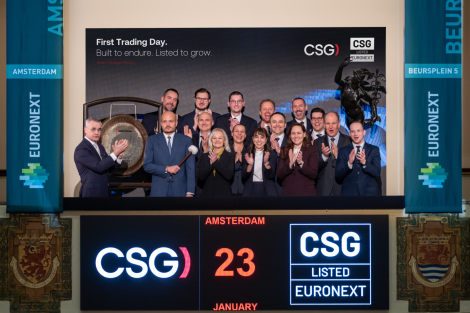 Strengthening Europe’s strategic autonomy through capital marketsCzechoslovak Group lists on EuronextRead more
World’s largest defence IPO ever recorded.
Learn more about Euronext’s initiatives to enhance financing and visibility for European aerospace and defence companies -
Trading
 Where European Government Bonds meet the futureFixed Income derivativesRead more
Trade Mini Bond Futures on main European Government Bonds
-
Clearing
 Step into Europe’s next phase of Repo ClearingRepo ClearingRead more
Euronext is expanding its repo clearing services to boost market access, liquidity provision and collateral optimisation across Europe.
-
CSD
 European CSD modelBuilding the CSD of Choice in EuropeRead more
Euronext Securities is shaping the future of European capital markets by enhancing integration, connectivity, and innovation.
-
Technology
 Euronext Technology SolutionsHigh-Frequency Trading Solution (HFTS)Read more
The new generation of high-frequency risk trading platforms, offering the highest performance with ultra-low latency and minimal jitter, all at a low total cost of ownership.
-
Data
-
Indices
 Access the white paperInvesting in the future of Europe with innovative indicesRead more
The first edition of the Euronext Index Outlook series with a particular focus on the European Strategic Autonomy Index.
-
About Euronext
 Euronext strategic planInnovate for Growth 2027Read more
Shaping capital markets for future generations

Euronext announces December 2025 quarterly review results of the ISEQ® family
Euronext Securities Convergence Programme: building a unified future for post-trade services
The Euronext Securities Convergence Programme is a cornerstone of our “Innovate for Growth” 2027 strategy, designed to harmonise post-trade processes, reduce fragmentation and costs, and deliver a scalable, unified infrastructure across our European markets. As we progress through this six-year initiative, we are proud to share the latest updates and resources now available to our clients and stakeholders.
Our focus is our clients
The last few months have been dedicated to helping clients understand the future services that will be supported by Euronext Securities as part of the Convergence initiative, and how these services differ from the ones currently offered. Thanks to many deep-dive sessions, we have been able to assist our clients in their understanding and improve the related documentation.
For our core services, we have released a baseline version of service description documents in early November 2025. These services are currently under development and will be ready for internal testing in Q1 2026, before being opened up for client testing in 2027.
As Euronext Securities Copenhagen will be the first of our CSDs to move to the new platform, we have set up a local joint governance group to manage the deployment timeline and secure the critical shift to T+1 in October 2027.
After an intense and very constructive process with Danish market participants, we now confirm August 2028 for the migration of the Danish market. Euronext teams are progressing at full speed, and in line with the plan, to deliver the platform for client testing by mid-December 2027. There is no European success without a Nordic dimension, and we are excited to work on this project with the Nordic community.
Key milestones:
-
2026: Release of the first new service (ISIN codification) for Euronext Securities Copenhagen
-
December 2027: Start of client testing of the new platform and services
-
August 2028: Release of the platform for Euronext Securities Copenhagen
For Euronext Securities Milan, Oslo and Porto, we will engage in a similar way, with the aim of helping clients assess the impacts of the new services on their infrastructure, and detailed management of local specificities.
Documentation on Convergence services
To help clients from all markets prepare for the Convergence Programme, we have published a comprehensive set of supporting documents and resources, including:
-
Settlement services and settlement penalties
-
Securities management
-
ISIN codification service
-
Client master data and account management
-
Connectivity session notes
-
Overview of extended services
These resources are updated regularly and available on our website: Convergence programme documentation. We encourage all stakeholders to check for the latest updates and notifications.
A unified future for post-trade services
The Convergence Programme is central to Euronext Securities’ vision of delivering a unified, resilient and innovative post-trade infrastructure for Europe. By harmonising processes, technology and client experience across our CSDs, we are building a platform that supports growth, efficiency and operational excellence for all market participants.
Common Corporate Action platform: Porto migration date
The Common Corporate Action platform will support a wide range of corporate events, including dividends, interest payments, redemptions and reorganisations, with enhanced automation and standardisation.
Euronext Securities’ goal is to implement a software that provides the market with new functionalities while offering the highest levels of quality and robustness. We have therefore decided to postpone the migration for Euronext Securities Porto by a few weeks in order to allow us to reach those levels and to give the market to complete testing. We are now actively working with the market to identify a suitable alternative date, taking into consideration the year-end IT freezes in different organisations.
There is no impact foreseen on the migrations in Denmark (September 2026) and Italy (June 2026), nor on the European Offering initiative.
|
|
|
Deep-dive sessions and meetings are scheduled regularly to support client engagement, with recent sessions focusing on the issuance process for the Danish market.
To see the latest updates and notifications, go to: Corporate events service overview.
For any questions or to engage further with our team, please contact us at convergence@euronext.com or via your relationship manager.
|
|
European Offering – Progress update and next steps
By Jerome Blais, Head of European Expansion
At Euronext Securities, our ambition is clear: to give clients seamless, efficient and scalable access to Europe’s capital markets. We believe clients should expect more from their post-trade partners, and we are committed to delivering it.
The European Offering, a core strategic initiative, is designed to create a single, harmonised post-trade solution giving access to multiple European markets through one single access point, one membership and a unified set of innovative services. The initiative addresses the current fragmented, market-by-market infrastructure landscape in Europe and gives issuers, intermediaries and investors a streamlined way to operate across borders, while remaining fully compliant with local requirements.
From September 2026, market participants will—for the first time—be able to opt for a single access point to settle and hold equities and ETFs listed or issued in Amsterdam, Belgium, France and Italy. This new optionality introduces real post-trade optionality in these markets, allowing clients to consolidate activity, reduce operational complexity, optimise liquidity management, and benefit from competitive pricing and service levels across markets.
As the programme advances, our teams are focused on supporting clients throughout the journey, with dedicated teams to ensure a smooth implementation. Alongside this, we will continue to expand the range of markets and instruments available, providing clients with even greater operational flexibility and strategic reach.
Delivering on our vision: recent progress and milestones
Since announcing the initiative in November 2024, we have advanced the technical and operational integration of our CSDs, leveraging T2S connectivity to deliver harmonised settlement, simplified processes and operational scale.
We have engaged closely with clients and market participants to ensure that our solutions address real-world challenges, particularly market fragmentation and cross-border settlement frictions. As highlighted by Pierre Davoust, Head of Euronext Securities, our focus remains on delivering concrete solutions that support clients’ pan-European strategies and growth ambitions. By actively listening and adapting, we aim to become the partner that raises the bar for the entire industry.
Shaping the future of post-trade in Europe, a video interview with Pierre Davoust
Thought leadership and industry recognition
The latest Oxera Consulting LLP report, published in October 2025, highlights that competition in the CSD sector — supported by a common settlement platform like T2S — is key to overcoming Europe’s post-trade fragmentation and supporting capital markets growth.
From fragmentation to efficiency: insights from the Oxera CSD report
Euronext Securities is proud to be at the forefront of this transformation, offering a single access point to multiple markets and promoting interoperable solutions that lower costs and improve service quality for all market participants. We believe clients deserve an infrastructure that evolves with their needs, rather than one constrained by legacy frameworks.
Key milestones and service enhancements
-
New fee schedule for settlement
From September 2026, Euronext Securities Milan will introduce a simplified and transparent settlement fee grid, reducing costs for settlement of French, Belgian, Dutch and UK securities across all asset classes and transaction types. -
Banca Sella Holding
Banca Sella has adopted Euronext Securities’ European Offering model to settle ETFs on Euronext’s ETF Europe, the first fully integrated European marketplace for ETFs (and ETPs), leveraging the full value chain as trading participant, market maker, clearing member and settlement agent. This milestone allows Banca Sella to benefit from simplified cross-border settlement, direct multi-market access and optimised post-trade flows through a single account. -
Successful €425 convertible bond issuance
In May 2025, Euronext NV issued a €425 million convertible bond using Euronext Securities Milan. This successful transaction demonstrated the robustness and efficiency of our platform as a credible, competitive alternative to international CSDs. -
Shareholder Identification Service
Launched in May 2025, this service enhances transparency and shareholder engagement. Clients can find further details in our Service Description Document and on MyStandards. -
New French ETF Tax Service
Introduced in October 2025, this service enables French tax residents holding ETFs to benefit from efficient, compliant and harmonised post-trade tax processing. Equities and similar instruments will be included in a future release planned for June 2026. -
Expanded Passport programme
As part of our broader strategy to expand issuer access across jurisdictions, Euronext Securities continues to extend its passporting capabilities for equity issuers. Following recent additions such as Switzerland, we have now secured authorisation from the Belgian FSMA to provide Core-CSD services for Belgian-incorporated companies. This new Belgian passport enables us to support the full securities lifecycle — from primary issuance to settlement and custody — in full alignment with local regulation and market practice. Further jurisdictions, including South Africa and the United Kingdom, will be added soon, reinforcing our ambition to offer issuers a seamless European gateway through a single, unified post-trade platform.
Access to documentation and resources
To support clients in understanding and preparing for the European Offering, we have made a comprehensive set of documentation and resources available on our website, including project updates, technical specifications, membership information and FAQs:
For more information on the European Offering and how it can support your business, please contact your relationship manager.
Euronext announces December 2025 quarterly review results of the BEL® Family indices
Euronext announces December 2025 quarterly review results of the PSI®
Confirmation of the go-live of Euronext’s new settlement model in September 2026
Confirmation of the go-live of Euronext’s new settlement model in September 2026
Euronext confirms that, starting 21 September 2026, Euronext Amsterdam, Brussels and Paris will designate Euronext Securities as the default Central Securities Depository (CSD) for the settlement of equity transactions and ETP euro transactions executed on these markets.
This marks an important milestone in the delivery of one of the most relevant projects of the “Innovate for Growth 2027” strategic plan, with the establishment of the new and innovative settlement model on Euronext markets.
With this model, for the first time in Europe, clients will have the ability to manage multiple European equity and ETP markets in one unique European CSD, Euronext Securities, and therefore benefit from simplicity, efficiency and economies of scale.
This model will also offer clients a genuine choice and the advantages of competition: starting 21 September 2026, clients will be able to use either Euronext Securities or Clearstream Europe AG, Euroclear Bank, Euroclear Belgium, Euroclear France and Euroclear Nederland as alternative CSDs if they wish to do so.
With this confirmation, Euronext reaffirms its industrial commitment to advancing a more competitive and more consolidated post-trade infrastructure to support the growth of European capital markets, in line with the objectives of the Market Infrastructure and Supervision Package promoted by the European Commission.
Euronext announces December 2025 quarterly review results of the AEX® Family
Hear from the expert: Insights from Citi's Head of FMI Strategy and Change Management
Join us for an exclusive interview with Armanda Mago Citi’s Head of FMI Strategy and Change Management for Europe, who shares insights from over 25 years in financial services. Discover her perspective on the opportunities and challenges in European capital markets, from the transition to T+1 and digital assets to the need for greater harmonisation. Learn how her experience across front and back-office roles shapes her approach to post-trade transformation and hear about the unexpected lessons she has uncovered along the way.
Tell us a bit about yourself and your role at Citi
I am performing now, within Citibank Custody business, the role Head of FMI Strategy and Change Management for Europe, focused on the many anticipated changes in the European capital markets landscape over the next three to five years including the transition to T+1, SIU implementation, market infrastructure evolution, and digital assets adoption. Prior to my current role, I led Citi’s Custody business for Europe and the UK where I was responsible for business strategy, growth, and custody transformation across these geographies, including engagement with FMIs and key stakeholders. I joined Citi around 15 years ago, first in Latin America where I held a number of roles including Head of Securities Services business for the region [excluding Brazil and Mexico] and Head of Securities Services for Colombia. I moved to Europe with Citi in 2020 to lead product and service consistency across our Europe and the UK branches including Citi’s T2S markets. Prior to Citi, I spent six years as Operations and Issuer Heads at the Colombian Stock Exchange (BVC) where I led the integration project between the Colombian, Peruvian and Chilean equity markets. I now have over 25 years of experience in the financial services sector across investment banking, capital markets and the public sector and I continue to be enthused by what lies ahead.
What do you see as the biggest opportunity and challenge that needs to be addressed in the post-trade industry?
As multiple analysts and economists have pointed to, Europe’s capital markets have the potential to compete with the US. Europe’s capital markets have deep liquidity to attract issuers and offer attractive rates to finance the region’s economic growth while making savings more attractive and profitable to support citizens’ pensions and retirement plans. However, the landscape is complex. Multiple national laws, regulations and market practices are creating challenges like high costs and liquidity fragmentation that will need to be addressed to realize the opportunity for Europe.
The biggest challenge and at the same time, the biggest opportunity lies in how these differences can be overcome with feasible and scalable measures.
Some of these measures could be single rulebooks for issuance and corporate events, multimarket CSDs ensuring consistency in messaging, aligning information sources, and gaining scale to reduce costs for participants.
What’s the most unexpected lesson you’ve learned or myth you’ve debunked by working in the financial industry?
The most unexpected lesson I learned, while working in the financial industry was the true nature of its operational sophistication.
My early career in capital markets, specifically in investment banking's front office, immersed me in discussions of co-location, nanosecond trade execution, algorithmic investment strategies, and the relentless pursuit of time-to-market advantages. However, transitioning to manage the back office at the exchange presented a different reality where the reliance on manual processes, paper-based workflows still existed, coupled with daily stress on end-of-day closures. While this unveiled a less glamorous, more foundational side of capital markets, it also unexpectedly ignited a deep passion for understanding and optimizing these critical, often overlooked, operational pillars.
Euronext on the European Commission’s Market Integration and Supervision Package: an interview with Chief Policy Officer, Dr. Jakub Michalik
The European Commission’s Market Integration and Supervision Package is set to reshape how trading, post-trade and supervision operate across the EU. Positioned as a key milestone for the Savings and Investment Union, the package seeks to simplify rules and reduce long-standing fragmentation in European market infrastructure.
To understand how the reforms could impact European capital markets and what they mean specifically for Euronext, we spoke with Dr. Jakub Michalik, Chief Policy Officer and Member of the Executive Committee at Euronext, about the strategic implications of the proposal and the opportunities it creates for deeper European market integration.
The European Commission is positioning the Market Integration and Supervision Package as a milestone for the Savings and Investment Union. From Euronext’s perspective, which elements of the proposal are the most strategically important, and what impact would they have on the way European markets function today?
According to Jakub Michalik, three areas of the proposal stand out from Euronext’s perspective.
He points first to the simplification and harmonisation efforts which align closely with the Commission’s wider objective of reducing regulatory burdens by 25%. “The package contains a strong set of simplification measures,” he explains. “It introduces steps to limit duplications in regulatory reporting and establishes a single reporting hub within ESMA, which will make reporting more streamlined and more efficient.” A further source of simplification comes from the decision to rely more on regulations rather than directives, which he notes will “clean and simplify the entire regulatory framework” and reduce barriers caused by differing national transpositions, and harmonisation of supervision.
The second major area concerns post-trade infrastructure. He welcomes the Commission’s push to enhance the use of Target2-Securities through mandatory connectivity. “T2S today already provides a strong basis for post-trade integration,” he says. “Mandatory connectivity would help create a more competitive and more integrated settlement environment in Europe.” He also highlights the proposal’s openness to new technologies, including DLT, which supports innovation in post-trade processes.
The third element relates to market structure and liquidity, where he sees room for greater ambition. While there are some limited improvements to trading rules, he notes that there is an opportunity to further strengthen the attractiveness of European markets for capital raising. “This area is important,” he says, “because deeper liquidity and stronger market structure are essential for Europe’s competitiveness.” While Euronext addresses this with its single, proprietary trading platform Optiq®, giving clients access to Europe’s largest liquidity pool by connecting markets across Europe, a significant – and still growing – part of the European equities is traded on bilateral basis or in dark pools. “This is largely driven by unlevel regulatory playing field and policymakers and regulators need to look at this worrying trend for European markets with a remedy action”, he argues.
The package also touches on interoperability, access rules and post-trade competition. How can Europe encourage innovation and open access while still safeguarding financial stability and avoiding fragmentation?
Jakub Michalik notes that encouraging innovation in post-trade must go hand in hand with addressing longstanding barriers in both settlement and clearing.
On the settlement side, he emphasises the importance of connecting all CSDs to Target2-Securities. “T2S already offers a solid basis for integration,” he says. “If all CSDs are connected, clients will be able to settle transactions in a more efficient and less fragmented environment.” He refers to the recent OXERA study on the pan-European settlement infrastructure as supporting this direction.
The Oxera report highlights that fostering competition among CSDs can effectively address Europe’s post-trade fragmentation and help strengthen its capital markets, so long as all CSDs operate on the common settlement infrastructure, Target2-Securities. Euronext is at the forefront of this shift, broadening options for issuers, investors and intermediaries, while leading in innovation. ”Our upcoming European Offering builds directly on this momentum, providing clients with the choice to access multiple markets through a single, harmonised post-trade entry point and further reducing structural complexity across Europe” he explains.
Turning to clearing, he acknowledges that interoperability can be a useful tool to increase competition, but stresses that it must be approached carefully. “Interoperability has potential,” he explains, “but today the European CCP landscape is quite uneven. Some CCPs are more resilient and more established in their operations than others.”
Mandatory interoperability, he says, could introduce risk by requiring CCPs to rely on the risk management and supervision of others. “Competition should not come at the expense of financial stability,” he says, underscoring the need for a balanced approach.
The package puts strong emphasis on cross-border supervision of trading venues, CSDs and CCPs. How will a more harmonised supervisory framework change the way pan-European infrastructures like Euronext actually operate day-to-day?
For Jakub Michalik, increased supervisory harmonisation and a truly European approach to supervision would make a tangible difference to how groups like Euronext operate on a daily basis.
He explains that Euronext, like other pan-European infrastructures active in trading, clearing and settlement, currently faces “various differences in supervisory approaches, supervisory culture and gold-plating across jurisdictions.” These divergences slow down the integration of activities within the Group and limit the ability to fully benefit from scale, including in areas such as intergroup outsourcing.
A more harmonised supervisory framework, he says, would contribute to more consistent and more streamlined processes across markets. This would reflect the fact that European market infrastructures have become increasingly integrated on the private side, making the convergence of supervisory practices a natural next step. Such harmonisation also aligns with recommendations made in recent reports by Mario Draghi and Enrico Letta on strengthening Europe’s single market.
Looking ahead, what would you say is the most important step Europe must take to build deeper liquidity pools and channel more of its private savings into productive investment, and what role do you see Euronext playing in accelerating that shift?
Jakub Michalik emphasises that the Market Integration and Supervision Package must be seen alongside the broader set of initiatives under the Savings and Investment Union. He points to the Commission’s recent proposals aimed at strengthening retail investor participation, including frameworks for Member States to introduce savings and investment accounts and needed tax incentives to support market-based investing. Measures to increase the involvement of pension systems in equity markets, published in November, are another important component.
“These initiatives, taken together with efforts to improve lit trading and increase addressable liquidity, can lead to higher participation in capital markets, ultimately increasing the attractivity of the European markets,” he explains.
Euronext, he says, sees itself as an active driver of this transition. “We will continue to work with European and national authorities to make these initiatives a success, and to offer cost-efficient and simple solutions for investors.”
Towards a stronger Savings and Investment Union
The discussion with Jakub Michalik makes clear that the Market Integration and Supervision Package represents a decisive step towards a stronger Savings and Investment Union. Euronext welcomes the Commission’s efforts to advance more harmonised supervision, a simplified and more coherent rulebook, and deeper post-trade integration, all of which are essential to improving operational efficiency and strengthening the competitiveness of European capital markets. At the same time, as Jakub Michalik underlined, further progress on liquidity, market structure and transparency will be critical to ensure that European companies can fully benefit from deeper, more accessible capital pools. Euronext remains committed to working with policymakers and national authorities to help deliver markets that are fair, efficient and globally competitive.
Next steps
We expect the publication of the Market Integration and Supervision Package to mark the start of an intense legislative process, whereby the European Parliament, Council of Ministers and the European Commission will analyse and debate the proposals in the coming months. We would welcome a swift conclusion of the political negotiations by early 2027, so that the European markets can benefit from the number of envisaged – and needed – improvements without unnecessary delays.