-
Listing
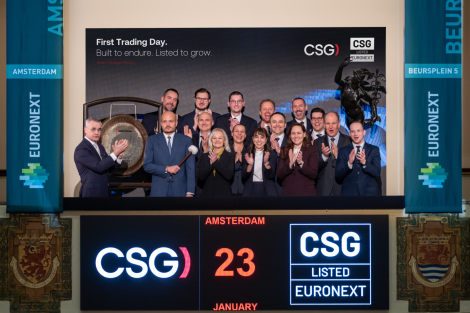 Strengthening Europe’s strategic autonomy through capital marketsCzechoslovak Group lists on EuronextRead more
World’s largest defence IPO ever recorded.
Learn more about Euronext’s initiatives to enhance financing and visibility for European aerospace and defence companies -
Trading
 Where European Government Bonds meet the futureFixed Income derivativesRead more
Trade Mini Bond Futures on main European Government Bonds
-
Clearing
 Step into Europe’s next phase of Repo ClearingRepo ClearingRead more
Euronext is expanding its repo clearing services to boost market access, liquidity provision and collateral optimisation across Europe.
-
CSD
 European CSD modelBuilding the CSD of Choice in EuropeRead more
Euronext Securities is shaping the future of European capital markets by enhancing integration, connectivity, and innovation.
-
Technology
 Euronext Technology SolutionsHigh-Frequency Trading Solution (HFTS)Read more
The new generation of high-frequency risk trading platforms, offering the highest performance with ultra-low latency and minimal jitter, all at a low total cost of ownership.
-
Data
-
Indices
 Access the white paperInvesting in the future of Europe with innovative indicesRead more
The first edition of the Euronext Index Outlook series with a particular focus on the European Strategic Autonomy Index.
-
About Euronext
 Euronext strategic planInnovate for Growth 2027Read more
Shaping capital markets for future generations

Euronext announces September 2024 quarterly review results of the PSI®
Euronext announces September 2024 quarterly review results of the BEL® Family indices
Euronext announces September 2024 review results of the OBX® Family
Soiltech lists on Euronext Expand Oslo
Euronext announces September 2024 quarterly review results of the AEX® Family
Euronext announces volumes for August 2024
ESG investing and sustainable growth: moving forward
Catch up with the opening event of Euronext Sustainability Week 2024.
The in-person conference, 'ESG investing and Sustainable Growth: moving forward' provides a useful opportunity to reflect on the latest and most recent challenges to sustainable growth in our countries.
Opening statement by Stéphane Boujnah, CEO of Euronext
In the opening event of Euronext Sustainability Week, representatives from listed companies, financial institutions, investment firms, and industry advisors debate the future challenges of sustainable growth investing. Discussions include new and emerging issues for Boards of Directors, growth opportunities generated by the transition to sustainable economies, carbon capture and storage technologies that are critical in the race to net-zero, and new frontiers in sustainable investing.
Videos from 'ESG investing and sustainable growth: moving forward':
The new frontier of ESG in the boardroom
Andrea Sironi, Chairman, Assicurazioni Generali
Giovanni Gorno Tempini, Chairman, CDP
Massimo Tononi, Chairman, Banco BPM
Monica de Virgiliis, Chairwoman, Snam
Moderator: Claudia Parzani, Chair, Borsa Italiana
Fireside chat
Francesco Starace, Chair, Science Based Targets Initiative
Moderator: Fabrizio Testa, CEO and GM, Borsa Italiana
Empowering sustainable growth
Paolo Dellachà, CEO, De Nora
Marco Arduini, CEO, EuroGroup Laminations
Moderator: Fabrizio Testa, CEO and GM, Borsa Italiana
New technologies and solutions in the path to net-zero
Luca Dal Fabbro, Executive Chairman Iren and Deputy Vice President, Utilitalia
Luigi Ciarrocchi, Director CCUS, Forestry & Agro‐Feedstock, ENI
Moderator: Andrea Rumiz, Commercial Director Carbon Certificates, South Pole
Fireside chat
Andrea Illy, Chairman illycaffè and Co-Chair Regenerative Society Foundation
Moderator: Claudia Parzani, Chair, Borsa Italiana
ESG Investing and financing: moving forward
Sara Lovisolo, Head of ESG Development, Amundi Italy
Paola Angeletti, Chief Sustainability Officer, Intesa Sanpaolo
Rahul Ghosh, MD and Global Head of Sustainable Finance, Moody’s Ratings
Fiona Melrose, Head of Group Strategy & ESG, UniCredit
Dario Mangilli, Head of Sustainability, IMPact SGR
Moderator: James Stacey, Global Leader, Clients & Industries, ERM
Key ESG trends from our issuers
Mathieu Caron, Global Head of Primary Markets, Euronext
Euronext strengthens its commitment to sustainable finance and corporate transparency with new initiatives unveiled during Euronext Sustainability Week
First release of the Euronext ESG Trends Report 2024 shows promising sustainability progress among Euronext-listed companies
In an era where sustainability is no longer a choice but a necessity, the Euronext ESG Trends Report provides a comprehensive overview of the Environmental, Social, and Governance (ESG) performances among Euronext-listed companies. Released during Euronext Sustainability Week (full agenda), this annual report details the latest trends, regulatory impacts, and the advances companies are making towards a more sustainable future.
Key highlights
-
Greenhouse Gas (GHG) Emissions: The report reveals a significant reduction in GHG emissions, with an average decrease of 14% in Scope 1 and 2 emissions over the past three years. Notably, mid-cap companies have been pivotal in this progress, showcasing a 29% reduction in their emissions.
-
Energy Management: Energy consumption patterns have evolved considerably, with large caps reducing their energy intensity by 26%. The share of renewable energy consumption and production has increased by 7 percentage points, reflecting a growing commitment to sustainable energy practices.
-
Diversity and Inclusion: There have also been improvements in diversity and inclusion, with a 2.1 percentage point increase in board gender diversity since 2021. Additionally, the number of women in management positions has seen a rise, highlighting ongoing efforts to foster gender equality in the workplace.
-
EU Taxonomy: The report underscores the rapid adoption of EU Taxonomy criteria, with 70% of large caps and 49% of mid-caps already aligning with the new reporting obligations. This demonstrates the critical role of regulations in integrating ESG key performance indicators (KPIs) into corporate reporting.
The Euronext ESG Trends Report 2024 is an essential read for investors, policymakers, and stakeholders interested in the sustainability journey of Euronext-listed companies. It not only highlights the achievements and challenges, but also sets the stage for future improvements in ESG practices. By providing transparent and detailed data, Euronext empowers companies and investors to make informed decisions that drive sustainable growth.
About the database
The data presented in the Euronext ESG Trends Report 2024 is derived from Euronext’s extensive ESG database (My ESG Profile), which includes over 97,000 raw data points covering the years 2020 to 2023. The database focuses on more than 50 quantitative indicators per issuer, aligned with the Corporate Sustainability Reporting Directive (CSRD), Sustainable Finance Disclosure Regulation (SFDR), and the EU Taxonomy. The data exclusively comprises reported figures, ensuring accuracy and reliability, and covers 1,729 Euronext-listed companies.
Introducing the ESG Reporting Guide 2024: Euronext's ultimate guide to sustainability reporting
We are thrilled to announce the release of our ESG Reporting Guide 2024, made available during the Euronext Sustainability Week. This comprehensive guide is an essential resource for companies looking to enhance their Environmental, Social, and Governance (ESG) practices, to remain in line with the latest EU regulations.
As sustainability continues to shape the future of business, this guide provides valuable insights into navigating complex ESG reporting requirements, including the Corporate Sustainability Reporting Directive (CSRD) and the EU Taxonomy. Whether you're a private company, SME, or large listed issuer, the ESG Reporting Guide offers tailored strategies to help you meet regulatory demands and strengthen your ESG performance.
Equip your business with the tools it needs to succeed in a sustainable world! Download your copy of the ESG Reporting Guide 2024 today and take the next step in your company's sustainability journey.